Showing posts with label opinion. Show all posts

OPINION: Dolomite as Antidepressant: Still Expensive, Absolutely Useless


Photo credit: Janela Mendoza

Unfortunately, national depression is not cured as the second phase of the Manila Bay Dolomite Sand Project kicks off with almost half the budget of the National Mental Health Program along with a new batch of freshly dumped therapeutic dolomite sand. Makes you wonder—why does the presidential spokesperson expect synthetic sand to “take care of our mental health”?

In response to qualms about the dolomite sand, Harry Roque in a press conference dated September 6, 2020 suggested that the "beautification of the bay" was not for naught because it may prove ideal for our collective mental health. In Roque's defense, multiple studies have shown that calming and scenic environments do help in one's mental state. However, the current mental healthcare system coupled with the atmosphere the dolomite dumping has fostered presents an incredibly hollow attempt of promoting mental health in the Philippines.

The problem with the Manila Bay Dolomite Sand Project, other than its absolutely awful timing in a global health crisis, is that it’s probably as murky as the Manila Bay waters it was trying to restore.

For one, the project doesn’t show up in documents that detail Manila Bay rehabilitation activities. It’s not even included in the National Economic and Development Authority’s Manila Bay Sustainable Development Master Plan.

In fact, groups like OCEANA PH and Greenpeace Philippines have reasons to suspect that the rehabilitation has violated at least five laws, like the National Culture Heritage Act of 2009. They also noted that the project failed to undergo consultations with stakeholders. The most notable instance of this regards the main source of dolomite for the project—Cebu. The Cebu Provincial Government didn’t even greenlight the extraction of dolomite in the first place, which allegedly destroyed natural corals near the mine site.

Not wanting to be left out, the budget also has a problem with transparency. As reported by the Department of Environment and Natural Resources (DENR), only P28 million was used for the first batch of dolomite overlay, from crushing to shipping. Now, that's a reasonable amount—until you remember that there’s another P370 million unaccounted for. The P265 million for its second phase was said to include installation of solar lighting, a temporary fence, and a fishing wharf, but still remains as dodgy as anything in the dolomite sand project.

And honestly, the budget we can account for—the P28 million—is impractical. Many experts and environmental groups have said that the dolomite sand will be easily eroded even with artificial structures as wave breakers. The UP Marine Science Institute explains that the nature of Metro Manila coasts during storm seasons will just lead to the sand inevitably washing out.

This is not even touching on the ping-pong match between environmental experts and the government debating on whether the dolomite sand is even good for the environment in the first place.

Reports by the DENR say that the synthetic sand grains are too small and bear similar biological components to the corals endemic to the area, making it “harmless” to the coastal ecosystem. Though environmental groups and experts point out that dolomite contains heavy metals that are harmful to the aquatic life of Manila Bay. Crushed dolomite is also not native to the area to begin with, which can lead to the disruption of the bay’s biodiversity.

As much as it is understandable that beaches are calming for some people, just looking at the synthetic sand in Manila Bay seems to cause more stress and bewilderment than anything due to its controversial existence. Seeing as it has already received enormous public backlash and mockery, it’s not impossible to think that the “Dolomite Beach” is doing more harm than good for our mental well-being.

But let's say—what if the dolomite dumping isn't as questionable as it is? What if it wasn't done during a pandemic, was irrefutably environmentally friendly, had little repercussions to our health, and didn’t seem to have bypassed multiple laws? Would it still improve the Filipino's mental health?

Perhaps a bit, but the reason why mental health is such a problem in the Philippines is the system (or lack thereof) itself.

Sadly, it is common knowledge that the mental health sector is deeply neglected. The budget for the sector is far from being able to successfully aid in the worsening mental health crisis here in the country.

Mental health only makes up an estimated 2.65% of the health budget, with most of it being allotted towards mental health hospitals like the National Center For Mental Health (NCMH) as there is no specific mental health line in the budget.

In the 2021 budget, P1.6 billion was allotted for the NCMH, which is admittedly higher than the P1.2 billion allotted last year. But at the same time, the national hospital was refused P440 million from its P840-million requested funds for maintenance and other operating expenses. This, paired with the virus and the rising rates of mental disorders amidst the quarantine, is a spell for management disaster.

The budget allocation for mental health-related medicine has also been slashed, amounting to P84 million—half of what the Department of Health (DOH) had initially requested. This equates to P23 for each Filipino—a far cry from the usual cost of P40 to P300 among common psychotropic medicines.

And yes, the government has undoubtedly made strides to vitalize the sector, the most notable being the passing of the country’s first mental health act—Republic Act 11036, simply known as the Mental Health Act. With this act, the government aims to integrate mental health into the primary care system and decentralize mental health services from the National Capital Region.

However, after two years since its enactment, there is little progress towards accessible and affordable mental healthcare.

Healthcare facilities are still mainly found in Metro Manila, and even then, they are few and far between. There are only four mental hospitals, 46 psychiatric inpatient units, and 29 outpatient mental health facilities for the whole country.

And as expected, along with the lack of facilities comes a lack of professionals. As of writing, there are estimated to be 548 psychiatrists practicing in the country, approximately 0.5 per 100,000 Filipinos.

The World Health Organization (WHO) recommends 10 psychiatrists per 100,000 population.

What’s worse is that the majority of our psychiatrists work in for-profit services and are mainly based in the major urban areas. Because of this, many provinces depend on health workers that have been trained in psychosocial interventions to support those with medical issues, not actual psychiatric specialists themselves.

To top it all off, per section 43 of the Mental Health Act, a mental health division was supposed to be created. But, the Department of Budget and Management has yet to authorize the recruitment of eight mental health office personnel needed to make the division. Instead, the DOH opted to hire a contractual staff in its place.

And with the knowledge of the dolomite dumping's budget being less transparent than what should be the norm for government spending, it's depressing to see such an important matter as mental health pushed to the side.

In actuality, the reason why the act appears to be so ineffective is the neglect that the national government has for mental health. The 2021 allocation for the national mental health program is only P615 million, which translates to a measly P5.69 for every Filipino.

No wonder why resources for mental healthcare are in scarcity.

Now, some may argue that the budget for health is being saved for a bigger problem—the ongoing pandemic. But they fail to see the data and studies that point to another health emergency that is getting worse alongside the said global health crisis.

According to the Philippine WHO Special Initiative for Mental Health conducted in the early part of 2020, at least 3.6 million Filipinos suffer from one kind of mental, neurological, and substance use disorder. And both the DOH and WHO agree that this number may be bigger, if not for the stigma and the lack of mental healthcare in more provincial parts of the country.

The NCMH’s hotline has reported an increase in monthly calls regarding depression, with 1,000 calls every month on average compared to the average of 40 calls pre-lockdown.

The average monthly calls for suicide-related concerns have similarly risen to 289. On a report by the Philippine Statistics Authority, deaths attributed to suicide have also, unfortunately, risen to 26%.

This is not to say that the government should spend less on the COVID-19 response—far from that. This is just to shed light on why it’s frustrating to see mental health still left to the wayside in favor of ill-timed and ill-managed rehabilitation projects, especially during a pandemic where more and more people find themselves depressed and handicapped.

In a metaphorical sense, the scars in our healthcare are deep and in need of immediate and proper care and attention. A band-aid in the form of sand with an ongoing history of controversy will not help the victims of a failing system.

In the end, the most sensical thing to do would be to stop the Manila Bay Dolomite Sand Project as soon as possible and redirect its funds to mental health.

Besides being full of issues regarding its environmental impact and legality, it is also impractical. The sand can be easily washed out. And, again, the money can be better spent on actual mental health response, on our actual mental health.

With the money and attention it rightfully deserves, we’ll be able to strengthen the foundations of our mental healthcare—achieving accessible and affordable health services for all. Because again, as Roque said, we need to take care of mental health, but to do that, we need full government support. // by Eda White

OPINION: A Safe Space For Transgender and Gender Non-conforming Students


Photo credit: Rina Mendigoria

On March 15, 2021, the UP Diliman Office of the Vice Chancellor for Academic Affairs and the UP Center for Women's and Gender Studies released guidelines on affirming transgender and gender non-conforming (TGNC) students’ names, pronouns, and titles after a complaint was filed by a UP student who was misgendered by their professor.

The guidelines included three main points—first, starting with asking for students’ lived name, pronouns, and titles, regardless of their transgender status. Similar to the university, UPIS’ information system does not allow for their students to include their lived name, pronouns, and titles. Only a few have let their teachers know that they are transgender or gender non-conforming, as well as their lived names, pronouns, and titles to prevent deadnaming or misgendering. Deadnaming happens when someone, intentionally or not, refers to a person who's transgender by the name they used before they "transitioned"—this could also be their birth name, given name or legal name. Meanwhile, misgendering occurs when one intentionally or unintentionally refers to a person, relates to a person, or uses language that doesn’t align with their affirmed gender to describe them. For example, referring to someone who identifies as a woman who uses she/her pronouns, and using “he/him” or calling her a “guy” is an act of misgendering. Deadnaming or misgendering may cause people in the TGNC community to feel anxious or be in a state of gender dysphoria which is “a state of clinically significant distress or impairment related to a strong desire to be of another gender, which may include desire to change primary and/or secondary sex characteristics.”

With regards to this, here is a sample prompt in the released guidelines from one of the faculty members: “What is your lived or chosen name, or your nickname? What are your pronouns? What title/s do you use? Note: If you are transgender, I understand that answering these questions truthfully may out you. Coming out should be done at your own pace, in your own time, so please only indicate the pronouns and titles that you would like me to use to refer to you. For the record, I use he/they pronouns and the title Mx.” (Montilla Doble, L. J., personal communication, March 8, 2021).

Next, when using the TGNC student’s lived name, pronouns, and titles, it is highly encouraged for non-TGNC students to do the same. This is because when a TGNC student allows one to know of their lived name, pronouns, and titles, it is a moment of vulnerability and trust. It is important to recognize this to show your commitment in upholding inclusivity and gender equality in the classroom. A helpful link on pronouns with the guidelines is provided as well: https://mypronouns.org. A pro-tip given is to think of lived names as similar to nicknames, in that, for some cisgender (non-transgender; their gender is aligned with their sex at birth) people, their nicknames are not at all based on or related to their legal names.

Lastly, it is said that other best practices for affirming TGNC students should be modeled. Some faculty members put their pronouns alongside their names in their email signatures. Others even include a pronoun clause or their lived name in their syllabi. Here is an example from the University of Southern Indiana College of Liberal Arts Equity, Diversity, and Inclusion syllabus statement:

“Please let me know of your lived name (especially if it’s different from your legal name or your name on the CRS and your pronouns (e.g., he, she, they, ze) so I can create a learning environment in which you are safe and respected” (C. Steltenpohl, personal communication, March 5, 2021).

Other best practices mentioned were to include using gender-sensitive and/or gender-neutral language whenever applicable (e.g., using "everyone" or "folks" instead of "guys" or "ladies and gentlemen," using the singular "they" instead of "he/she").

With UP being the first university to take such actions for their TGNC students, UPIS, being its laboratory school, has also been following suit with these guidelines. Although no official guidelines have been released by UPIS as of this writing, Prof. AC Nadora, the head of the Gender and Development (GAD) Committee, said that the UPIS Executive Committee (ExeComm) has diligently reminded the faculty to be sensitive when referring to students, whether it’s with their names, pronouns, or anything having to do with gender. An example she mentioned is when the teacher must either use gender neutral pronouns for the student, or ask about their preferences first.

When asked about if there are plans for UPIS getting its own customized policy, she mentioned that the GAD Committee is on alert for any feedback or concerns that students may want or feel the need to address as these would help with their future decisions and actions for the students.

Now, one may ask, "What difference does this make, anyway?" And to answer that, it’s because such a decision holds a lot more weight for TGNC students than one may think, especially if one identifies as cisgender. Besides the fact that UPIS is UP’s laboratory school, showcasing inclusivity and having these guidelines will establish the school as a safe space. The act of asking pronouns and whether one has a preferred name means a lot to TGNC students. It may seem like such a simple gesture, but implementing these guidelines and using one’s preferred name can help lift off the burden of gender dysphoria, among many other issues faced by TGNC students. Implementing such guidelines doesn’t just spread awareness; it also helps normalize the concepts and dismantles the stigma and misinformation surrounding these topics.

Given that the school celebrated its first Pride Month last year, as hosted by the Pamunuan ng Kamag-Aral (pKA), having these guidelines would even encourage students in feeling a sense of liberation in expressing themselves at school. As mentioned previously, the modelling of these guidelines could be shown in classes; an example commonly posted by teachers on social media is giving their students introduce-yourself cards that include questions such as if they have a preferred name/s to go by, their pronouns, and most importantly, when the teacher can use them, on the first day of classes. This helps respect the students’ privacy, as it prevents the dangers and risks—in case they aren’t out to people outside school, such as their family—and provides comfort, which can bring about gender euphoria, or the joy in being able to use their true gender identity.

It’s a good thing that the ExeComm and the faculty members have been exerting efforts, but there’s no harm in looking for more ways in which we can all improve or have a better understanding and application of such topics. However, once a UPIS-customized policy is implemented, it is crucial that the staff and faculty are well-informed on the guidelines as well as the topic itself. After all, they are the authority who must be making sure that the students feel comfortable in their learning environment. It could start with seminars from professionals on the topic of these particular guidelines, too. All in all, understanding these topics first would be helpful in conversing, developing trust, and forming a healthy bond with their students. Besides the faculty, students must also be educated in this aspect through their health curriculum as the subject covers similar matters, and this can be improved through including the application of using preferred pronouns and names.

The simple act of releasing guidelines serves as a stepping stone that leads us closer to the next important step: acceptance. After all, since these guidelines show genuine support, they not only allow, but encourage the students to express themselves freely. Showing that the school officially cares makes students feel more safe and comfortable, and in the process, creates a more LGBTQ-friendly environment at UPIS. // by Danie Cabrera and Simon Delfinado


OPINION: Gutom o Dahas?


Photo credit: Gabie Gamba

Isang taon nang sumailalim sa lockdown ang Pilipinas at samu't saring klasipikasyon ng quarantine na ang naipatupad. Ngunit sa pabago-bagong mga patakaran, masasabi ba nating naging makatao ang pagpapatupad sa mga ito?

Sa ilalim ng ECQ o ang pinakaistriktong uri ng quarantine, tanging mga essential persons lang ang maaaring maglabas-pasok sa NCR Plus na binubuo ng NCR at ilang karatig na lalawigan. Nagtakda rin ng curfew ang Local Government Units (LGUs) para sa mga residente mula ika-6 ng gabi hanggang ika-5 ng umaga. Ang mga mamamayang nahuling lumalabas ng kanilang bahay sa pagitan ng mga oras na ito ay sinasabing hinuhuli at minamaltrato. Noong Marso hanggang Setyembre ng nakaraang taon, higit 100,000 ang bilang ng hinuling lumabag sa quarantine regulations samantalang nasa 52,745 naman ang naitala simula nang inimplementa ang ‘NCR Plus’ quarantine sa bansa.

Matatandaang, Abril ng kasalukuyang taon, naging laman ng mga pahayagan ang isyu ng paglabag sa karapatang pantao kaugnay ng pagpanaw ng isang curfew violator na si Darren Peñaredondo. Binawian ito ng buhay pagkatapos patawan ng 300 pumping exercises bilang parusa sa paglabag sa curfew na siyang itunuturong dahilan ng kaniyang pagkamatay. “Pag-uwi niya po nang umaga ng Biyernes, mag-aalas otso ng umaga, akay-akay na po siya ng kasama niyang nahuli sakay ng mobile,” wika ng kinakasama ng biktima na si Reichelyn Balce sa kanyang panayam sa Rappler noong Abril 5.

Noong Abril 5, 2020, isang kaso naman ng pamamahiya ang naranasan ng ilang nahuling lumabag sa quarantine protocol sa Pandacaqui, Pampanga. Pinilit ang mga biktimang maghalikan, sumayaw, at mag-push-up bilang parusa habang naka-live ito sa social media.

Ayon sa panayam ng Rappler sa biktimang si Jessica Mallari noong Abril 7, "Gusto po naming sabihin na sorry po kung lumabag kami sa batas. Okay lang naman po sana na parusahan kami kaso ni-live po kami, iyon po ang hindi namin matanggap. Kung yung community service lang po na maglilinis kami ayos na po sa amin iyon. Simula po nung napabaranggay kami ‘di na po ako lumabas, pati ‘yung kasama namin.”

Maliban sa pamamahiya sa social media, ilan pa sa mga naitalang hindi makataong parusa sa mga hindi sumunod sa curfew ay ang pagbibilad sa araw bago palayain, pagkukulong ng limang kabataan sa kulungan ng aso sa Santa Cruz, Laguna, at, ang pinakamalala, ang dalawang magkahiwalay na kaso ng pambubugbog sa Calamba, Laguna at pamamaril sa San Ildefonso, Bulacan na parehong nauwi sa kamatayan ng dalawang biktima.

Nakababahalang hindi isang isolated case ang kahindik-hindik na sinapit ni Peñaredondo at Mallari. Batay sa tala ng Amnesty International at Country Reports on Human Rights Practices 2020 ng United States, maraming Pilipino ang nakaranas ng pang-aabuso mula sa kapulisan at awtoridad dahil sa marahas nilang pamamaraan ng pagpapataw ng mga parusa sa mga lumalabag sa quarantine protocols.

Hindi wasto ang dahas, at pamamahiya bilang porma ng pagpaparusa. Maraming pamamaraan ng pagpataw ng parusa na naaayon sa batas, patas, at, higit sa lahat, makatao. Ang dahas ay nakapagdudulot ng takot, at ang pamamahiya ay nag-iiwan lamang ng lamat sa dangal ng isang tao. Tulad sa kaso ni Mallari na ilang araw na hindi lumabas ng bahay matapos ang insidente.

Malinaw na paglabag sa karapatang pantao ang marahas na mga pagpaparusang ito. Hindi lamang pisikal na sakit ng katawan ang kanilang naranasan, tinanggalan din sila ng karapatan sa buhay at kalayaan. Sa ganitong mga kaganapan, marapat lamang na busisiin ang mga hakbang na ito sa pagpaparusa lalo pa't kapwa Pilipino ang siyang nagiging biktima.

Mapatunayan mang nagkasala ang mga inakusahang lumabag sa curfew habang umiiral ang ECQ, kailanma’y hindi magiging makatuwiran ang paglabag sa karapatang pantao ng kahit na sino. Ganito rin ang pinupunto ng Commission on Human Rights (CHR). Mariing kinondena ng kanilang kinatawan na si Jacqueline De Guia ang ginamit na pamamaraan ng pagpaparusa ng mga awtoridad. Sa kanyang panayam sa Rappler noong April 7, sinabi niyang ang quarantine ay ipinatutupad upang mapangalagaan ng gobyerno ang kalusugan ng mga Pilipino, hindi magsilbi bilang peace and order solution.

Sa gitna ng mga pinagdadaanan ng bayan dulot ng pandemya, panahon na para pakinggan naman ng pamahalaan ang hinaing at dahilan ng mga mamamayan nito sa pagsuway sa mga quarantine protocol na ipinatutupad ng gobyerno.

Hindi maipagkakailang may mga lumalabag sa curfew dahil sa mga hindi balidong dahilan. Subalit, hindi rin natin maitatangging marami sa mga mamamayang naging sangkot dito ay walang pamimilian. Sa kaso ng pumanaw na si Peñaredondo, bibili lang daw sana ang biktima ng tubig. Pagdating naman sa ibang kaso, tulad na lamang ng biktima ng pambubugbog sa Calamba at si Jessica Mallari na lumabas upang bumili ng tinapay para sa kanyang lola, karamihan ay napipilitang lumabas upang mamili ng makakain—pang-araw-araw na gawain na talaga nga namang kinakailangang isagawa upang mabuhay, lalo na sa gitna ng pandemya.

Labag man sa mga kautusan ng mga awtoridad, hindi ba’t patunay lamang ito na sa panahon ngayon, tila wala silang maaasahan kundi ang kanilang mga sarili dahil maaaring ‘di sapat ang natatanggap na anumang tulong mula sa gobyerno? Hindi nila maaaring ipukol lamang ang sisi sa mga mamamayang ginagawa ang lahat ng kanilang makakaya upang kumita ng perang panustos para sa kanilang mga pangangailangan. Pakikipagsapalaran para malamnan ang kumukulong sikmura ang dahilan kung minsan ng mga paglabag na ito.

Tandaan nating milyon-milyong mga Pilipino ang nawalan ng trabaho sa gitna ng pandemya. Ang ating ekonomiya’y lugmok na lugmok din. Batay sa Asian Development Outlook (ADO) 2020 magpapatuloy pa ang krisis na ito kung higit pang babagsak ng Gross Domestic Product (GDP) ng bansa. Tinatayang nasa 87,000 hanggang 252,000 na mga Pilipino pa ang mawawalan ng trabaho na magbubunsod sa pagkalugi ng mula sa $669 milyon hanggang $1.94 bilyon.

Ang katanungan ngayon ay ano ang mga hakbang na ginagawa ng gobyerno para solusyonan ang mga suliraning ito? Bakit sa halip na solusyon ang kanilang ihain ay tila batas na may pangil ang nais nilang ipatikim sa publiko? Habang ginagapang ng kanilang nasasakupan ang bawat araw, narito sila, matatayog na nakatayo, inaabuso ang kanilang kapangyarihan. Hindi pa ba sapat na patunay ng “overreach” ng kapangyarihan ng mga nasa awtoridad ang mga ginamit na mga pamamaraan ng pagpapataw ng parusa?

Gayumpaman, sa kabila ng mga ito, dahil parehong nagkasala ang magkabilang panig ay marapat lamang na kapwa sila makatanggap ng karampatang kaparusahan. Ngunit kinakailangang isaalang-alang na anumang paraan ng pagpapataw ng pagpaparusa ay dapat na maging patas at higit sa lahat ay makatao.

Ang mga mamamayang lumabag sa itinakdang oras ng curfew ay mas mainam na hingan na lamang ng community service bilang parusa. Sa pamamagitan nito ay hindi lamang masisigurong magiging makatao ang magaganap na pagpaparusa kundi magiging tulay rin ito upang makatulong ang mga nagkasala sa kanilang komunidad.

Para naman sa mga sangkot na pulis, sila ay dapat managot alinsunod sa Anti-Torture Act of 2009 o RA 9745. Sa ilalim nito, sinumang gumawa o naging kasabwat ng naganap na torture—ito man ay pisikal o berbal—ay maaaring makulong depende sa bigat ng krimen at sa epekto nito sa biktima. Marapat ding makatanggap ng tulong at compensation ang mga biktima sa pamamagitan ng rehabilitation programs o kaya nama’y bayad danyos na hindi bababa sa P10,000.

Muli, iisa ang katanungan ng publiko—ano nga ba ang marapat nilang gawin upang mabuhay kung may banta sa labas man o loob ng kanilang tahanan? Sa loob, kalam ng kanilang mga sikmura ang tanging rinig sa apat na haligi ng kanilang bahay. Sa labas nama’y mga daing ng mga kapitbahay, kaibigan, maging ng kanilang mga pamilya na nakararanas ng marahas na pagpaparusa. Ano na lamang ang kanilang pipiliin kung kapwa nakakikilabot ang kanilang kinakailangang harapin?

Sinumang lumabag sa batas o utos ng gobyerno ay nararapat na makatanggap ng parusa, simpleng mamamayan man o nasa katungkulan. Ngunit sa pagpataw ng parusa at maging sa mga batas na mayroon ang bansa, kailanman ay hindi dapat malabag ang karapatang pantao.
Ito'y dahil ang maingat na pagpaplano at makataong implementasyon ang susi upang maiwasan ang mga pagkakataon kung saan walang ibang pamimilian ang mga mamamayan kundi lumabag sa batas, para lamang mabuhay. // nina Christine Caparas at EJ Cruz


OPINION: Deja Vu: Lockdown 2021


Photo credit: Ronnel Fernando

Isang taon nang nakikipaglaban ang bansa kontra COVID-19 at wala pa ring pagbabago sa mga ipinatutupad ng gobyerno upang matugunan ang patuloy na pagtaas ng bilang ng mga kaso at iba pang suliraning bunga nito. Isa sa mga naging hakbang ng pamahalaan ay ang pagsasailalim ng Metro Manila, Bulacan, Cavite, at Rizal sa Enhanced Community Quarantine (ECQ 2.0) noong Marso 29, ngunit ito ay walang naidulot na pagbabago.

Ang mga suliraning kinahaharap ng Pilipinas ngayon ay hindi na bago para masolusyunan ng gobyerno. Ang pag-implementa ng lockdown ay nakatutulong lamang sa pagbagal ng transmisyon ng virus ngunit hindi tuluyang pagsugpo nito. Hindi na rin kaya ng Pilipinas na sumailalim pa sa matagal at mahabang lockdown. Sa katunayan, nagbunga ito ng pagkawala ng trabaho ng mahigit 130,000 na mga Pilipino sa Metro Manila at 4.2 milyon naman sa buong bansa. Sa loob lamang ng dalawang linggo, naapektuhan ng ECQ 2.0 ang ekonomiya ng Pilipinas kung saan nagkaroon ng economic loss na Php 180 bilyon. Ayon sa datos na iniulat ng Rappler noong Mayo 3, bumaba rin ang Growth Domestic Product (GDP) ng bansa ng 10.7% at dahil dito, inaasahang tataas ang poverty rate ng 10.6%.

Hindi lamang lockdown at ayuda ang solusyon. Kinakailangan ng masusing pagpaplano at pagsasagawa ng mahahalagang hakbang tulad ng ligtas at maayos na pamimigay ng ayuda, contact tracing, mass testing, pagtatamo ng herd immunity, at pagbibigay-pansin sa mga healthcare workers. Dagdag pa rito, kinakailangang maging transparent ang gobyerno sa kanilang mga pinaplano kabilang na ang Inter-Agency Task Force on Emerging Infectious Diseases (IATF).

Una, nang ipatupad ang ECQ 2.0, nagbigay ng ayudang Php 1,000-4,000 kada pamilya ang pamahalaan. Kadikit ng pamamahagi ng ayuda ang problema ng bawat baranggay sa pagdagsa ng mga tao para makakuha nito. Ayon nga kay Mayor Joy Belmonte nang makapanayam ito ng news agency na ABS-CBN noong Abril 8, nahihirapan silang kontrolin ang pagdagsa ng mga tao, at nangangamba siyang maging superspreader event pa ito.

Hindi na lumang problema ito, isang taon na ang lumipas, pahirapan pa rin sa pagkuha ng ayuda dahil sa kawalan ng maayos sa sistema. Gayondin, sapat ba ang halagang ito para sa pangangailangan ng isang indibidwal o pamilya sa loob ng ilang linggo? Marahil panahon na para tayahin ang pamamaraan na ginagamit ng pamahalaan sa pamamahagi nito gayondin ang halagang itinatakda na matatanggap ng bawat pamilyang Pilipino.

Pangalawa, kailangang pagtuunan ng pansin ang contact tracing na siyang isa sa mga mahahalagang hakbang upang labanan ang COVID-19. Sa pamamagitan ng mabisang contact tracing, maaaring mapigilan ang paglaganap ng virus dahil matutugunan agad ang mga taong nagkaroon ng contact dito. Subalit, hindi ganito ang kaso sa Pilipinas. Ayon sa isang artikulo ng CNN na isinulat noon lamang Mayo 4, sa bawat kumpirmadong kaso, dapat ay 15 na close contacts ang natutunton para masabing epektibo ito. Ang inaasahan ng gobyernong matunton ay 30 close contacts sa rural areas habang 37 naman sa urban. Ngunit, ang contact tracing ratio sa Pilipinas ay nasa 1:3 lamang. Napakalayo nito mula sa ideyal na ratio, patunay na hindi maganda ang contract tracing system dito bansa. Ang ganitong kalidad ng contact tracing ay nagreresulta sa delayed actions at patuloy na pagdami ng kaso dahil sa kakulangan ng kontrol sa mga taong nagpositibo o maaaring magpositibo sa virus.

Liban pa riyan, kinakailangang pagtuunan din ng pansin ang mass testing. Noong nakaraang taon, maraming health workers ang naghangad ng mass testing upang makontrol agad ang pagkalat ng virus. Subalit, nang mag-file ng petisyon ukol sa libreng mass testing, agad itong tinanggihan ng Korte Suprema. Nagpapatupad naman na raw ang IATF ng mga health protocols, at mayroon nang libreng swab test ang mga health workers, close contacts ng COVID-19 patients, at ang may mga sintomas.

Kung isasaalang-alang ang hindi maayos na contact tracing, lahat ng tao ay exposed sa virus dahil wala nang nakaaalam kung nasaan na at sino na ang may virus. Kaya naman mainam na gawing mandatory ang mass testing sa buong Pilipinas sapagkat maaari lamang makita kung positibo ba sila o hindi sa pamamagitan nito.

Bukod pa sa pagpaplano ng contact tracing at mass testing, dapat ay hangarin ng gobyerno ngayon ang pagtatamo ng herd immunity. Matatamo ito kung ang karamihan na sa nasabing populasyon ay nakatanggap na ng bakuna. Mainam na lalo pang ikampanya ang pagpapabakuna at gawin itong accessible sa lahat.

Dahil sa limitadong paggalaw ng mga tao sa ilalim ng quarantine, maaaring mag-implementa ang mga Local Government Unit (LGU) ng fever clinics at home services na pwedeng puntahan ng mga mamamayang nangangailangan ng tulong medikal. Ang fever clinic ay bubuoin ng mga trained volunteers ngunit pangangasiwaan ng mga nurse at doktor. Samantalang ang home service naman ay ang pagpunta ng mga medical staff sa bahay ng pasyente upang doon magsagawa ng konsultasyon. Mas makabubuti rin kung ang pagpapabakuna ay may home service. Lubos itong makatutulong sa mga taong walang kakayahang magpunta sa mga nakatalagang lugar ng pagpapabakuna, lalo na kung isasaalang-alang din ang mga nasa priority list ng bakuna (senior citizens, indigent people, at people with comorbidities). Halimbawa ng mga bansang nagsasagawa nito ay Australia at China, at batay sa obserbasyon ng mga bansang ito, epektibo ang pagkakaroon ng mga fever clinics at home service.

Kung ang mga ito ay maisasagawa sa bansa, malaking ginhawa ang maibibigay nito sa mga tao dahil matutugunan ang kanilang pangangailangang medikal at maiiwasan din nito ang transmisyon ng COVID-19.

Sa kasagsagan ng isang pandemya, napakahalaga ng government transparency upang malaman ng mga mamamayan ang tunay na nangyayari sa bansa. Kinakailangang malaman ng taumbayan ang mga planong ipatutupad upang magkaroon ng public participation na makatutulong sa pagtugon sa pandemya. Ang government opacity ang pinagmumulan ng misinformation at pagkawala ng tiwala ng mga tao sa mga hakbang ng gobyerno. Hindi lamang lockdown ang tanging solusyon sa pandemyang ito. Kung hindi magbibingi-bingihan ang pamahalaan sa mga suhestiyon ng mga eksperto at organisasyon sa larangan ng medisina, marahil ay mapapabilang na rin tayo sa mga bansang unti-unti nang napagtatagumpayan ang paglaban sa COVID-19. // nina Eloisa Dufourt, Pia Marantan, at Waya Silarde

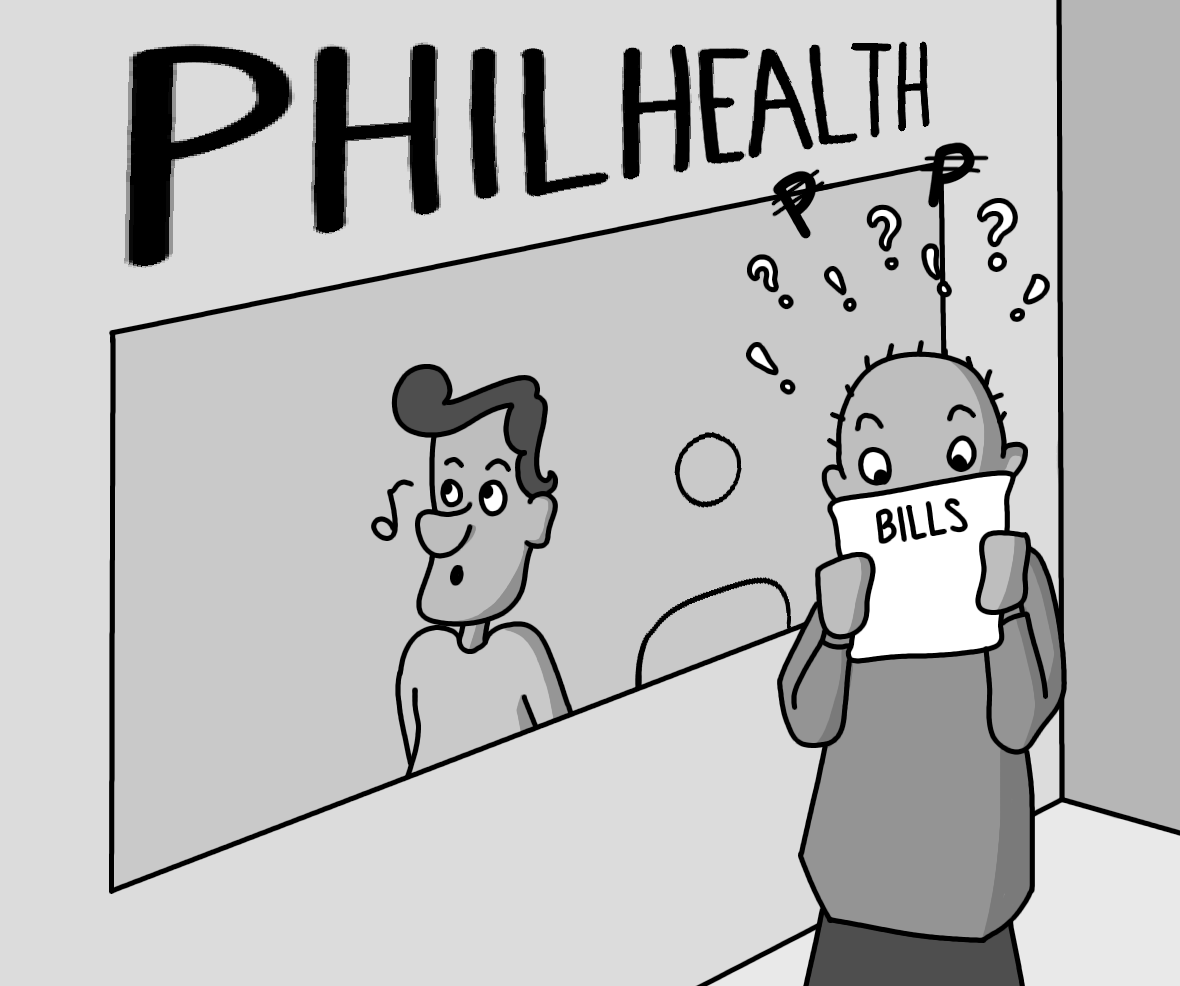
Opinion: Philhealth’s Hindrances to Quality Health Services


Photo Credit: Yel Brusola

The Philippine Health Insurance Corporation (PhilHealth) made the right decision of suspending the hike in members' contributions that was supposed to take effect this month. An estimated P13-billion deficit is to come from this suspension, and they say that this will hinder PhilHealth’s operations and its members' access to health care aid. 

However, is this deficit really the only hindrance to a good public health care system?

Under the Universal Health Care (UHC) Act, an increase of 0.5 percent in member premiums every year is to be implemented at the beginning of 2021 until it reaches the limit of 5 percent in the year 2025. This January, PhilHealth's monthly rates were scheduled to increase from last year’s 3 percent to 3.5 percent. This would have resulted in raising the minimum contributions from the current P300 to P350. This scheduled increase, however, was met with fierce opposition since the latter half of 2020 when multiple corruption allegations were brought about against the state health insurer. 

Ricardo Morales, former PhilHealth chief, has admitted that in 2019, an estimated rate of 7.5 percent or 10 billion of PhilHealth’s budget was lost due to fraud. After this, he had the gall to argue that even in developed countries, corruption is still very prevalent with benefit claimants trying to acquire more than their rightful share; that this is considered the “norm.” This may be the norm, but it doesn't mean that we should ignore it, especially with even more allegations involving PhilHealth seemingly falling on deaf ears?

One of these allegations is the suspected exploitation of the Interim Reimbursement Mechanism (IRM), a system created primarily to assist PhilHealth in computing the exact amount of delayed reimbursements that the corporation owes to each hospital and clinic after dealing with various disputes and fraudulent claims.This system supposedly ensures that despite the irregularities, hospitals and clinics are still provided with financial aid during fortuitous events like calamities and the ongoing pandemic.

However this does not seem to be the case because "favoritism" also seems to be rampant in the system. In a House hearing, lawmakers pointed out that a number of dialysis and maternity clinics that do not cater to COVID-19 patients were the earliest recipients of monetary support. Meanwhile, COVID-19 referral hospitals waited months to receive their IRM allotment. This makes the implementation of IRM more questionable, given that it's supposed to provide aid during an unforeseen pandemic.

In addition to this, former PhilHealth senior vice president for the legal sector Rodolfo del Rosario Jr. admitted that the IRM releases from March to early June were “illegal.” According to him, PhilHealth released more than P14 billion as early as March, to different hospitals and clinics all over the country when the IRM should have taken effect only on June 11 which further proves that the suspended system was exploited and is indeed ineffective.

Another issue discussed during the hearing was the alleged overpricing of IT equipment. According to Alejandro Cabading, a member of PhilHealth’s board of directors, PhilHealth spent a P2.1-billion budget for the procurement of several pieces of IT equipment, or P734 million more than the amount prescribed by the Department of Information and Communications Technology (DICT).

Lastly, the notorious overpayments in all case rate systems, which summed up to as much as P102 billion from 2013 to 2018. The case rate is a fixed amount, depending on a patient’s illness, of reimbursement to the hospital. It includes payment for healthcare professionals and medical facilities based on the average costs of treatment for every common illness. 

Ironically, the government implemented the case rate system to prevent fraudsters from bloating reimbursements of services given to PhilHealth members as the corporation would provide the standardized amounts of aid equivalent to whatever a patient's condition was. However, contrary to its initial objective, the case rate is now one of the most exploited systems, mostly used within the corporation for corruption due to the nature of how money is reimbursed. As previously stated, monetary support given to each member is fixed. Therefore, PhilHealth is often forced to pay this fixed amount even if a patient's actual medical bills are much lower.

Philhealth made the right decision to temporarily postpone the increase in its members’ contribution especially with all these corruption allegations and the difficulties the people are facing amidst the pandemic. However, with the expected deficit in the budget, the public is left asking, where exactly will the government get the funds needed to continue the operations of PhilHealth when most of the corporation’s budget have been lost due to corruption?

President Rodrigo Duterte was quick to reassure his citizens by releasing a statement in support of the postponement of the contribution hike. “May I just suggest to PhilHealth Chairman Dante Gierran, not now. No increase in contributions. I will look for the money to fill it up. We will look for money,” the president promised.

With millions of Filipinos still grappling with the effects of the pandemic, the public cannot afford to lose P500 from their already-limited budget, especially when most of them either have lost their jobs or are barely making enough money to provide for their families. Therefore, the government is expected to bear the burden of aiding its citizens. As the president himself stated, “Anyway, that is the job of the government--to make it easy for everybody at this time of our lives.” With that, this action is not commendable but rather a decision that we, as Filipinos, are entitled to expect of our government because it is their duty to provide for the country’s citizens. 

With that said, why is there a need for PhilHealth to push through with its members' contribution hike? Why must the members of PhilHealth, why must the public be responsible for the wrongdoings and shortcomings of these public officials, especially amidst a pandemic?

Instead of temporarily postponing the contribution hike, isn’t it fair that our government seek justice and punish these corrupt officials? After all, the very root of the lack of budget is not the expected 13-billion deficit but its officials who have been alleged of multiple cases of corruption and fraud that goes all the way through the system.

PhilHealth has made the right decision to temporarily halt its members’ contribution hike. However, those who are proven to be involved in the agency’s corruption of funds must also be held accountable to ensure that PhilHealth’s budget is allocated and used solely for its monthly contributing members, the Filipino people. //by Christine Caparas

Sources:

Opinion: The Disease of Incompetence


Photo Credit: Yel Brusola

We could have been living in a country that could fight against the COVID pandemic. A place where we could walk around without worry, without the fear of getting infected, which may result in death. There was a chance to put things back to the way they used to be. However, due to the government’s incompetence and lack of foresight, we’ve missed the opportunity to achieve our desired future.

In the latter half of 2020, Sen. Panfilo Lacson revealed that we could have secured the delivery of 10 million Pfizer vaccines. But according to him, because someone "dropped the ball" and failed to submit necessary documents, namely, the Confidentiality Disclosure Agreement (CDA), we were not able to purchase the vaccines that could've arrived as early as January of this year. The person who “dropped the ball” was then revealed to be Health Sec. Duque, which was confirmed by Foreign Affairs Secretary Teodoro “Teddy Boy” Locsin Jr. in December 2020.

Health Sec. Duque was quick to defend himself against Lacson’s accusations by saying that the Philippine government's negotiation with Pfizer is still ongoing. Though Lacson, who was not swayed by Duque's answer, says that while it is true that the deal for vaccines is still ongoing, the current deal is a “renewed initiative after they missed the bus the first time.” This means that the ongoing deal, which Sec. Duque was referring to, was actually a newer deal. 

Ironically, even though the government had a slow response regarding the COVID-19 vaccines, 
several members of the Presidential Security Group (PSG) and 100,000 Chinese Philippine Offshore Gaming Operators (POGO) were reported to be the first recipients of illegally smuggled vaccines.

Since November of the previous year, an estimated number of over 100,000 Chinese POGOs have received vaccinations despite the absence of regulatory approval by the Food and Drug Administration (FDA), according to civic leader Teresita Ang-See. Ang-See said she viewed the vaccination as a "positive" development as this could help prevent transmission in the country. 

"Okay lang sa akin na ma-bakunahan sila, kasi [It's okay with me that they are vaccinated, because] we don't have much control with them," she said. "Wala naman tayong [We don’t have] basis to touch base with them, especially the POGO (Philippine Offshore Gaming Operator) workers. So, I'm glad that they are being vaccinated because it protects us also if they are protected."

This statement contradicts her previous ones in which Ang-See herself noted that since no vaccine has been approved to date by the FDA, there might be lapses in the operations, such as the process of administering the vaccine, as well as its handling and storage. This may put Filipino citizens at risk of infection, especially since multiple cases of reinfection have been recorded among the supposedly vaccinated Chinese POGOs. In addition, this is also a clear violation of the FDA Laws. Even if the people involved are foreigners, they still reside in the Philippines and they must abide by the laws of our country.

Another issue involving illegal vaccinations came to light earlier this year after the PSG revealed that they were some of the very first people who were vaccinated with the COVID-19 vaccine. They argued that the use of vaccines was necessary for their duty to protect the president. Sen. Bato Dela Rosa defended their actions by thanking the PSG for becoming "guinea pigs" for the smuggled vaccine, thus further proving that this put their lives at risk.

In spite of these attempts by the government to justify and romanticize their actions, it is still very evident that the numerous attempts of the importation of COVID-19 vaccines have failed to follow certain procedures in accordance with the law. Therefore, these actions are deemed illegal. And if their reasons for using the vaccines were to perform their duties and serve the president, then why was there a need to smuggle these vaccines?

FDA Rules and Laws 

There are certain rules and regulations that the government must follow when it comes to accepting vaccines. Here are some of the rules that were violated by the PSG and the Chinese POGO workers. 

First is the "Drug and Cosmetic Act”, as amended by Executive Order No. 175, s. 1987, and Republic Act No. 9711, otherwise known as the “Food and Drug Administration Act of 2009”. The Food and Drug Administration (FDA) was created to establish and maintain a drug regulatory system to ensure the purity, safety, efficacy, and quality of drugs and vaccines in the country. Section 21 of Republic Act No. 3720, as amended, provides that any new drug should have an authorization from the FDA based on an application containing full reports of investigations to show whether or not such drug is safe, efficacious, and of good quality for use based on clinical studies, prior to manufacture, sale, importation, exportation, distribution, or transfer thereof. But the PSG didn’t even bother asking the FDA for authorization on the vaccine that they used, which directly violates Republic Act No. 3720.

The second law that was violated is Section 406 of Republic Act Number 10863 (The Custom Modernization and Tariff Act). This act states, as a general rule, that “all importations of government for its own use or that of its subordinate branches or its instrumentalities, corporations, agencies, or instrumentalities owned and controlled by the government shall be subject to the duties, taxes, fees, and other charges.”

Based on news reports, this did not seem to be the case after the vaccines were illegally smuggled into the country and were used by the PSG, who blatantly took advantage of being direct subordinates of the president himself as they did not go through the indicated procedures in the previously stated law. 

Where do these actions leave the public whose only demand to the government is the government's transparency regarding issues that involve the health and safety of the country amidst this pandemic? The rest of the Filipinos have continuously been neglected while their leaders, the government continues to cater only to its members and selected groups of individuals, in particular, the Chinese POGOs and members of the PSG. When will the public receive the necessary vaccines essential to save their lives? When will the government truly start protecting the lives of its citizens whom they are responsible for?

The issue of smuggling should be thoroughly investigated and the people responsible for this should be punished accordingly. The government should be sensitive to the people’s plight and be transparent when it comes to the issue of vaccines, especially because the COVID-19 vaccine can save our country from this difficult situation. //by Christine Caparas and Simon Delfinado


Sources:
https://newsinfo.inquirer.net/1379008/gordon-whos-behind-vaccine-smuggling
https://www.rappler.com/nation/robredo-says-unauthorized-vaccine-should-be-probed
https://www.cnn.ph/news/2021/1/4/Probe-POGO-workers-vaccination.html
https://www.straitstimes.com/asia/se-asia/philippine-presidents-guards-used-smuggled-covid-19-vaccines-minister
https://cnnphilippines.com/news/2020/12/30/Duterte-PSG-smuggled-vaccines-COVID-19-Lorenzana.html
https://newsinfo.inquirer.net/1379537/lacson-why-focus-on-psg-vaccination-when-we-have-no-vaccines-yet
https://www.cnn.ph/news/2021/1/4/Probe-POGO-workers-vaccination.html
https://www.fda.gov.ph/fda-circular-no-2020-036-guidelines-on-the-issuance-of-emergency-use-authorization-for-drugs-and-vaccines-for-covid-19/
https://newsinfo.inquirer.net/1378708/bato-defends-psg-thanks-them-for-being-guinea-pigs-for-unauthorized-vaccine

Opinion: Who Really Killed the Gregorios?


Photo Credit: Yel Brusola

We were entering the final days of 2020. People all over the country were preparing for Christmas and the coming of the new year. There was an atmosphere of celebration and hopefulness. For a while, it seemed that people could forget about their problems and look forward to a better year where everything will turn out okay. However, during this traditionally joyous time, bangs resounded across the country to wake the people up from their pleasant dreams. And no, I am not talking about the explosion of firecrackers and fireworks.

Just a few days before Christmas, a video of a policeman shooting two people dead went viral on social media. The policeman caught on the video was then-Police Senior Master Sergeant Jonel Nuezca and the two civilians he killed were Frank Gregorio and his mother Sonya Gregorio. The shooting occurred on December 20 in the Tarlac province. 

This incident is one of far too many in the long string of police killings that have occurred over the past four years of the current administration’s leadership. We must not forget 17-year-old Kian delos Santos, who was murdered in an anti-drug operation despite lack of evidence, or 13-year-old Aldrin Pineda, who was killed while hanging out with his friends. Then there are the killings of Winston Ragos, Reynaldo de Guzman, Carl Arnaiz, and many more at the hands of police officers. Some might claim that it is only a coincidence that these killings occurred during the term of the current administration. However, there is too much evidence that suggests otherwise. 

For one, the president has been promoting a nationwide culture of violence and impunity ever since he took office. He has been encouraging police officers, army soldiers, and even civilian vigilantes to kill people who are suspected drug users or pushers even without sufficient evidence. He gave “shoot to kill” orders regarding organized criminals and people who resist arrest. He even declared that he would protect those who will perform extrajudicial killings, saying that they will never go to prison on his watch. This declaration seems to hold true as extremely few police officers have been prosecuted and held accountable for the roles they have taken in the illegal killings. Meanwhile, narco lists containing the names of people who are allegedly involved in the illegal drug trade have also been released and some were even personally read out by the president. Many people on these lists have already had their lives taken by police officers or vigilantes. 

What the president has been doing may seem good to some people. These people say that we would be better off getting rid of drug pushers and criminals without having to wait too long for the process of the law. However, the implications that these things have are terrifying and, more importantly, real. The law serves to protect the rights of not only criminals and drug pushers, but also the innocent. Allowing the police to operate above the law sabotages this protection and leaves everyone vulnerable. When police officers and people in power are allowed to act as the judge, the jury, and the executioner, injustices and abuses happen. These injustices and abuses are already happening as shown by the countless innocent lives that the police have already taken. The police can only become bolder and bolder in committing atrocities if they know that any abusive actions can be attributed to the war on drugs. If they can simply label their victims as drug addicts or “nanlaban,” then they are assured that they won’t be held accountable for their actions. In the case of Nuezca, he was fortunately caught on video as he committed his crimes. However, the relative calmness with which he shot the mother and son pair seems to hint that this was not the first time he had knowingly killed innocent lives. His not guilty plea also shows a lack of remorse and a belief that he will not be prosecuted for his actions. 

The president has condemned the actions of Nuezca, but he and his allies have also claimed that the event was only an isolated incident. However, given the bloody history of violence and impunity that has been the trademark of this administration, this is obviously not the case. By insisting that the Tarlac incident is an isolated incident, the president distances himself from responsibility. Without acknowledgement that his actions are a huge factor in causing the Tarlac incident and without actions taken to eradicate impunity, the president’s condemnation is hollow. 

A continued refusal, despite evidence, to recognize that police brutality is a common event rooted in the culture of violence and impunity that the current administration has encouraged is a choice to return to one’s blissfully ignorant dreams while many are stuck in a nightmare. A word of warning though: keeping our eyes closed does not keep us or our loved ones safe from the lethal claws of police violence. We might just find ourselves as the next Gregorios, the next victims of the persistent culture of violence and impunity. If we want to keep each other safe, we need to wake up and collectively push for change. Hopefully, no more bangs will be needed in order for this to happen. //by Justin Aaron Polendey

Sources:

Opinion: Storming of the US Capitol: A Cautionary Tale


Photo Credit: Yel Brusola

Just hours before the Congress of the United States of America (USA) formally announce President-elect Joe Biden victorious in the country’s recent elections, Trump-loyalists from all over the country, incited by the outgoing president’s tweets, violently broke into the US Capitol to denounce the election results. These insurrectionists stormed into the offices of senators and house representatives forcing officials to evacuate the building or barricade themselves in empty rooms. The mob was dispersed eventually and was unable to stop the proclamation of Biden’s victory, but the incident ended with five people dead, multiple damages to property, and a blemish on the country’s democracy.

This affair proves that the lies and bigotry of America’s populist leader is getting out of hand. For years now, outgoing president Donald Trump has been vilifying enemies and wooing his mostly-white followers by spreading fake news and stoking divisions. His statements about the “Chinese Virus” just “going away,” scientists having political agenda because of their views on environmental issues, Black Lives Matter (BLM) being a symbol of hate, and, of course, baseless claims of having won the election are just some of them. Aided by social media, these statements were shared throughout the country, earning him the unwavering loyalty of his fanbase. 

Also, we cannot deny that the culture of racism and white privilege his government tolerated made it possible for his followers to enter the Capitol. At the height of the BLM movement, protesters were dealt with tear gas, rubber bullets, and mass arrests while the mob at the Capitol simply “overwhelmed” the Capitol police.

Unfortunately, these characteristics of the Trump administration are a lot closer to home than we wish.

In our own country, the Duterte administration also has a track record of using baseless and offensive statements to vilify enemies and rouse supporters. His campaign promise of a crime-free Philippines in the first three to six months of his term and his assurance of returning to normalcy by December 2020 were both proven false by time. His administration was also caught lying about not having a hand in the killing of ABS-CBN’s bid for franchise renewal and not knowing about the covert vaccination of the Presidential Security Group (PSG) through conflicting statements. Moreover, the president and his allies alleged that the Makabayan Bloc and other critics are front groups of the Communist Party of the Philippines (CPP), New People’s Army (NPA), and National Democratic Front (NDF) despite having no hard evidence. He also tainted Vice President Leni Robredo’s reputation with groundless allegations of affairs. 

His followers, egged on by statements such as these were quick to turn a blind eye on several of our country’s problems still unaddressed by the administration and the many legal processes it has railroaded to achieve its agenda. Instead, they directed their hate towards the administration’s enemies.

With these, the storming of the Capitol is no longer news from a faraway land but a cautionary tale of what might happen to our mechanisms for democracy if the culture of hate and fake news, incited by our populist administration, still persists and prospers. It makes us ask an important question on the fate of our country: what more might the president’s followers do given their steadfast support of anything that comes out his mouth? 

Hoping that our country will not face such dark times, we, Filipinos, must defend our democracy from deceit and hate. We must call out perpetrators of fake news and educate fellow citizens who continue to condone and tolerate the sins of the administration. And for those of us old enough, we need to practice our sacred right to vote in the upcoming 2022 elections and make it clear that we will not let a dishonest populist leader threaten our democracy once again. //by Lester Amurao

Sources:

Opinion: Kahalagahan ng Climate Justice


Photo Credit: Yel Brusola

Ang climate justice ay ang pagtingin sa global warming bilang isang isyung politikal at karapatang pantao. Ito ay dahil sa kakayahan nitong gumabay sa paggawa ng mga polisiyang tutugon sa suliraning dulot ng climate change. Masasakop din sa polisiya ang mga kaparaanang makatutulong sa mga mamamayang naapektuhan ng pinsala ng mga kalamidad. Ito ay dahil samu’t sari ang mga epekto ng climate change sa mga mamamayan – mula sa aspetong sosyolohikal, ekonomikal, pampublikong kalusugan, at marami pang iba.

Ang konsepto ng climate justice ay nagsimula noong 1999 sa debateng naganap sa Estados Unidos upang mapag-aralan ang pagbabago ng klima noon, ang epekto nito, at ang mga dapat na hakbang upang masolusyonan ito. Simula noon ay patuloy na itong sinusuportahan ng mga tao sa buong mundo.

Kabilang ang organisasyong Greenpeace Philippines sa mga sumusuporta sa panawagang ito. Nahaharap daw kasi ang mga Pilipino sa isang climate emergency dahil sa mga nararanasang matitinding bagyo at tagtuyot. Inaasahang mas lalala pa ito sa hinaharap at dapat papanagutin ang mga plantang nagdudulot ng polusyon. 

Mainam na mabigyang halaga ang climate justice sa ating bansa upang magkaroon na ng mga polisiya at proyektong gagabay sa mga planong ukol sa pag-adapt ng mga tao sa matitinding kalamidad. Kaugnay nito ang isinagawang pag-aaral ng Royal Town Planning Institute sa United Kingdom. Inilahad nila sa kanilang pag-aaral ang kahalagahan ng mga polisiyang nag-uugat sa climate justice. Ayon sa kanila, makatutulong ito upang maiwasan ang pagkasira ng lupa at tukuyin ang mga lugar na maaaring bahain o mapinsala ng panahon. Isinusulong din ang pagkakaroon ng green infrastructures kung saan mas magiging maayos ang daluyan ng tubig sa isang lugar. Nililimitahan nito ang paggamit ng sewage system na nagdadala ng maruming tubig. Ang tubig naman na mula sa ulan ay iipunin at gagamiting pandilig ng mga halaman at puno.

Kaugnay din nito ang papel ng climate justice sa pagbabawas sa greenhouse gases na inilalabas sa ating atmospera. Makatutulong ito sa pamamagitan ng mga polisiyang kokontrol sa pagdami ng greenhouse gases. Dagdag pa rito ang aksyon ng climate justice na mapanagot ang mga pribadong kumpanyang nagpapabaya sa mga naidudulot nilang masamang epekto sa kalikasan at sa kabuhayan ng mga tao.

Malaki ang maitutulong ng climate justice sa ating bansa dahil sa tumitinding mga epekto ng climate change. Ayon sa National Aeronautics and Space Administration (NASA), dulot ito ng pagtaas ng temperatura dahil sa paglaki ng porsyento ng greenhouse gases sa atmospera. Ito ngayon ay nagresulta sa mas matitinding kalamidad tulad ng dalawang magkasunod na bagyong tumama sa Pilipinas; ang mga bagyong Rolly (Goni) at Ulysses (Vamco).

Hindi biro ang epekto at pinsalang iniwan ng mga bagyong ito. 720,000 na pamilya o mahigit tatlong milyong indibidwal mula sa walong rehiyon—NCR, Ilocos, Cagayan Valley, Central Luzon, CALBARZON, MIMAROPA, Bicol, at CAR, ang naapektuhan ng bagyong Ulysses ayon sa Department of Social Welfare and Development (DSWD). Dagdag pa rito ang 3.84 bilyong pisong halaga ng napinsalang mga pananim ayon sa Disaster Risk Reduction and Management (DDRM).

Maliban pa sa bagyo, isa ring bunga ng climate change ang tagtuyot. Sa isang pag-aaral ng Philippine Atmospheric Geophysical Astronomical Services Administration (PAGASA), ito ay nagdudulot ng kawalan o pagkakaroon ng mababang kalidad ng tubig sa ilang mga lugar na makaaapekto sa kalusugan ng mga tao. Ang mga pananim ang pangunahing naapektuhan ng mabilis na pagbabago ng panahon sapagkat nagagambala nito ang normal na pagtubo na bumabase sa panahon. Maaari rin itong magdulot ng mga panibagong sakit sa mga hayop. Kasabay ng malakas na paghagupit ng mga bagyo, tumataas din ang lebel ng tubig sa mga dagat. Dahil dito, mas lumaki ang posibilidad ng mga pagbaha na sadyang makaaapekto sa mga lugar at kabuhayan ng mga mamamayan. 

Malaki ang pinsalang idinudulot nito lalo na sa mga taong nakararanas dahil apektado ang kanilang kabuhayan. Nagbubunga ito sa mas kakaunting suplay ng mga pangunahing bilihin tulad ng isda, gulay, bigas at marami pang iba. Ito ang dahilan ng pagtaas ng presyo kaya naman apektado rin nito ang ekonomiya. Ayon sa ulat ng Philstar, nagkakahalagang 90 bilyong piso ang napinsala ng limang magkakasunod na bagyo ngayong taon; ang mga bagyong Quinta, Rolly, Siony, Tonyo, at Ulysses. Ayon sa pahayag ni National Economic and Development Authority (NEDA) Undersecretary Rosemarie Edillion sa virtual conference noong Nobyembre 18, inaasahang ang mga pinsala ng bagyo ay magreresulta sa pagbaba ng 0.15% sa kabuuang Gross Development Production (GDP) ng bansa ngayong taon.

Napakabigat ng mga pinsalang kinahaharap ngayon ng bansa bunga ng mga sakuna. Pinatutunayan lamang ng mga pinsalang ito na kailangan na natin ng climate justice. Ito ay hindi lamang upang mabigyan ng solusyon ang suliranin sa kasalukuyan, kundi maging sa hinaharap. Sa ganitong paraan, ang mga pinsala sa susunod na pagkakataon ay hindi na lulubha pa.

Ngayong patuloy na nakikibaka ang mga mamamayan sa mga pinsala ng climate change, dapat makita na ang tugon dito ng bansa ay sa pangunguna ng mga nasa gobyerno. Mainam na maging maagap sila sa pagtugon lalo’t marami ang maaapektuhan, hindi lamang sa sektor ng agrikultura at ekonomiya kundi maging sa buhay at tirahan ng mga taong kanilang pinangangasiwaan.

Bilang mga mamamayan, mababatid na ang munti nating hakbang katulad ng pag-demand ng climate justice ay makapagbubunga ng malalaking aksyon para sa kapaligiran at sa mga apektado ng mga kalamidad. Katulad na lamang noong 2015 kung saan ang isang grupong binuo ng mga magsasaka, mangingisda, mga miyembro ng environmental groups, at mga samahang pangkarapatang pantao ay nag-file ng petisyon sa Commission on Human Rights (CHR) upang maimbestigahan ang responsibilidad ng 47 kompanyang nakatuon sa fossil-fuel at cement o tinatawag nilang Carbon Majors. Kabilang sa mga Carbon Majors ang Shell, ExxonMobil, BP, Chevron, at Repsol. Ito ay dahil sa umano'y idinudulot na polusyon ng kanilang mga planta.

Sinimulan ng CHR ang pag-iimbestiga sa isyung ito noong 2016 at natapos lamang ito noong 2019. Sa kanilang tatlong taon ng pag-iimbestiga ay natagpuan nila na ang Carbon Majors ay lumabag sa batas sibil at criminal laws dahil sa obstruction, willful obfuscation, at climate denial. Nagsagawa na ng mga paglilitis sa Manila, New York, at London kung saan inilahad ang mga ebidensiya at ang mga epekto ng kanilang mga paglabag sa Pilipinas at sa daigidig. Sa kabila nito, walang sumipot ni isa sa mga kinatawan ng mga Carbon Majors sa nasabing paglilitis.

Hindi pa man lubos na nakikita ang epekto ng pagpapatupad ng climate justice, natitiyak naman sa mga layunin nito na sadyang magiging kapaki-pakinabang ito sa lahat. Mainam na agad itong mapag-aralan at maisakatuparan na sa bansa sapagkat hindi maiiwasan ng Pilipinas ang mga tumitinding kalamidad. 

Ang ginawang petisyon ng grupong binuo ng mga magsasaka, mangingisda, at marami pang iba ay maaari ring gawin ng kahit sinong mamamayan. Maaaring gamitin ang social media upang maipagbigay-alam pa sa mga tao ang mga suliraning kinahaharap at kung ano ang magagawa rito ng climate justice.

‘Ika nga, “Prevention is better than cure.” Ngayon pa lang ay gawan na natin ng paraan ang mga suliraning dulot ng climate change at iwasan na ang lumalalang pinsala nito sa bansa. //ni Eloisa Dufourt

Opinion: Voters’ Registration: 2020 Edition


Photo Credit: Yel Brusola

Ngayong papalapit na ang Eleksyon 2022 na gaganapin sa Mayo 9, sinimulan na noong Setyembre 1 ng Commission on Elections (COMELEC) ang pagpaparehistro ng mga botante. Dulot ng kasalukuyang pandemya, iminungkahi ng mga nasa Kapulungan ng Kinatawan na gawing electronic ang sistemang ito upang matiyak ang kaligtasan ng mga mamamayan.

Ayon sa pahayag nina Senior Citizens partylist Rep. Francisco Datol Jr. at House Majority Leader Leyte Rep. Martin Romualdez sa COMELEC mula sa ulat ng Manila Bulletin noong Hulyo 27, ito ay hindi lamang para sa kaligtasan ng mga tao kundi para na rin sa mas madaling pagpaparehistro sa hinaharap.

“By adopting a system for online voter’s registration, we do not just make our electoral system more resilient to unexpected calamities such as the COVID-19 pandemic but also create a system that provides the Filipino electorate and our government an efficient, convenient, and cost-effective mechanism for voter’s registration in the long term.” 

Dahil dito, ninais ng mga mambabatas na maglahad ng pagsusog sa RA 8189 o ang “The Voters’ Registration Act of 1996.” Sa mungkahing House Bill 7063, gagawing electronic ang pagpaparehistro ng mga tao. Kukunin ang kanilang litrato at biometrics sa pamamagitan ng video conferencing gamit ang mga gadyet at ang makabagong teknolohiya na built-in device for fingerprint. Ang biometrics ay ang pisikal na datos ng tao tulad ng kanyang fingerprint, facial pattern, mata, boses, at iba pa.

May mga adbentahe ang sistemang ito sapagkat una, matitiyak ang kaligtasan ng mga mamamayan at makatutulong ito upang mapababa ang posibilidad ng pagkalat ng COVID-19. Pangalawa, mainam din itong paraan upang maiwasan ang epekto ng mga kalamidad na maaaring makaapekto sa pagdaos ng rehistrasyon tulad ng kasalukuyang quarantine. Magiging maginhawa ang prosesong ito dahil hindi na kinakailangan pang lumabas ng mga tao mula sa tahanan. 

Ngunit ang mungkahing ito ay hindi ipinatupad ng COMELEC at sa katunayan ay hindi ito ang ginagamit sa kasalukuyang pagpaparehistro. 

“Ramdam po namin ang panawagan ng publiko na ‘yan. Unfortunately, especially for first time voters, ay kailangan po kasi natin ang biometrics nila.” Iyan ang pahayag ng Tagapagsalita ng COMELEC na si James Jimenez sa CNN Philippines.

Nararapat lamang ang naging desisyon ng COMELEC sa paraan ng pagpaparehistro ngayong taon. Maraming haharaping mga suliranin ang sistemang electronic kung ito ay ipatutupad sa ating bansa. Kabilang na rito ang pagiging accessible ng internet at gadyet, ang kakailanganing badyet, mga kumplikasyong mararanasan sa paggamit ng panibagong teknolohiya, at ang seguridad ng mga datos.

Hindi masisigurado na ang lahat ng mga mamamayan ay makapagpaparehistro dahil sa kawalan ng akses nila sa internet o gadyet. Ayon sa ulat ng Inquirer, ang dami ng internet users sa Pilipinas noong Enero 2020 ay nasa 67% lamang ng populasyon. Kung ganitong porsyento ang may akses sa internet, hindi malabong ganito lamang din ang mga makapagpaparehistrong botante na kung susumahin ay sadyang kakaunti. Mahalaga na lahat ng mamamayan ay makapagparehistro dahil ito ay isang responsibilidad at partisipasyon para sa lipunan.

Kakailanganin din ng malaking badyet para maisagawa ang prosesong ito dahil sa pangangailangan ng mga mga equipment tulad ng built-in device for fingerprint, computers na gagamitan ng webcams, at iba pa.

Bilang ang sistemang ito ay bago sa karanasan, mataas ang posibilidad na magkaroon ito ng mga isyu. Mayroon nang mga pangyayari kung saan ang paggamit ng makabagong teknolohiya ay nagdulot ng aberya sa mga gawain. Katulad na lamang nang unang ipinatupad ang Precinct Count Optical Scan (PCOS) para sa eleksyon. Sa paggamit ng PCOS, nagkaroon ng maraming kumplikasyon na nakaapekto sa proseso ng pagboto. Kabilang na rito ang paper jamming, hindi pagtanggap ng mga balota, hindi pagbilang ng mga boto, at marami pang iba. Ngunit sa kabila ng mga suliraning kinaharap nito ay wala pa rin itong ipinagbago. Sa katunayan, hindi pa rin ito naging maayos noong sinubukang gamitin para sa Eleksyon 2019. Maaaring magkaroon din ng mga isyu sa electronic na sistema ng pagpaparehistro. 

Dagdag pa rito ay ang seguridad ng personal na impormasyon ng mga indibidwal. Kung gagawing electronic o online ang pagkuha sa impormasyon, hindi matitiyak ang seguridad ng impormasyon lalo na at laganap sa ating panahon ang hackers. Noong Agosto 28, 2020 lamang, na-hack ng “Phantom Troupe” ang website ng gobyerno. Nagawa ng grupong i-hack ang security system ng website at nagdagdag ng content dito. Ninais nilang makakuha ng mga impormasyong makatutulong sa pagpapahina ng gobyerno. Nagkaroon na rin ng mga pagtatangkang i-hack ang ilan sa mga website ng iba’t ibang paaralan. Hindi malayong mangyari itong muli.

Mas mainam ang pagsasagawa ng pisikal na pagpaparehistro kaysa sa electronic upang maiwasan nito ang mga suliraning nabanggit. Dagdag na rin dito ang kasiguraduhan ng makukuhang datos lalo na ang biometrics ng indibidwal. Dulot ng mabilis na pag-unlad ng teknolohiya, madali na lamang ding gawing hindi totoo ang mga impormasyon tulad na lamang ng lagda. Natitiyak din sa prosesong ito na ang taong magpaparehistro ay totoo at ang kanyang kalagayan ay pasok sa mga kwalipikasyon na hinahanap ng batas. 

Mas accessible din ang pisikal na rehistrasyon sa lahat ng mga mamamayan lalo na sa mga walang akses sa internet o gadyet. Hindi na rin kakailanganing gumastos ang gobyerno para sa mga equipment. 

Tinitiyak naman ng COMELEC na ang gagawing pagpaparehistro ay magiging maayos at ligtas mula sa pagkalat ng COVID-19 sa pamamagitan ng Resolution No. 10674. Dito nakasaad ang mga panuto at health protocol sa panahon ng pagsasagawa ng pagpaparehistro. Makikita rin dito ang mga kakailanganing gawin ng mga tao bago pumunta sa registration area.

Mahalaga na sa simulang bahagi pa lamang ng pagboto ay maayos na ang proseso upang maiwasan ang anomang kumplikasyon sa pagpaparehistro at pagtatala ng datos. Sa pamamagitan din nito ay maiiwasan ang pandaraya sa identidad ng mga botante. Mabusisi man ang prosesong ito ngunit magagarantiya nito ang seguridad ng mga impormasyon at ang maayos na sistema ng pagpaparehistro para sa Eleksyon 2022. // ni Eloisa Dufourt

Opinion: The Best Option for AY 2021-2022 UPCAT Admissions


Photo Credit: Yel Brusola

After weeks of deliberation, the University of the Philippines (UP) finally announced that the UP college admissions test (UPCAT) for AY 2021-2022 is cancelled. As of recent news the university is currently creating an algorithm to fit the applicants’ circumstances.

According to a statement released last October 27, 2020 by the Office of Admissions Director Francisco de los Reyes, UP experts came up with five possible actions for next school year’s college admissions after the coronavirus pandemic disrupted the yearly scheduled in-person entrance exam. The options posted are the following (as published on UP's official website):

1) A paper-and-pen administration of the UPCAT, subject to IATF and LGU COVID-19 protocols and coordination;

2) An online UPCAT;

3) A hybrid paper-and-pen and online mode for UPCAT;

4) A no-UPCAT scenario where UP may mine data from the applicant’s personal data sheet, high school records, the specific high school and performance of its graduates in UP, etc., to arrive at the University Predicted Grade (UPG);

5) A moratorium on freshman admission. 

Given these options, the Board of Regents weighed all the pros and cons to decide what would best benefit the incoming freshmen, the staff, and most importantly, the Philippines as a whole.

The first option, which is the paper-and-pen examination, has been proven effective over the past years. However, amidst a global pandemic, this would not have been the best decision to make. Yearly, there are around 100,000 applicants who take the UPCAT. This poses a potential health risk to the examinees and could easily contribute to the spread of the coronavirus (COVID-19). Furthermore, if this option had been chosen, the possibility of cheating among applicants would be greater since UP might have to extend the period of examination in order to strictly follow the health protocols. This would have led to examinees sharing information about the test questions and the students who will take the exam later will have an advantage because of this.

The second option, an online UPCAT, has the advantage of being safer and more accessible. However, this ease of access would only apply to those who have the privilege of a stable internet connection and a well-functioning device. Sadly, the Philippines ranks as one of the countries with the worst and most expensive internet connections in the world, according to VPN provider Surfshark’s 2020 Digital Quality of Life Index. Much like with the first option, cheating is also possible since there would be no observers to make sure that examinees do not use sources around them to look for the answers.

The third option, a combination of paper-and-pen and online UPCAT was also considered. It might seem like a great compromise, but the problem was that it most likely had the same set of disadvantages as the first two. With no further information released by the university, not much is known as to how UP would administer this kind of testing. 

The fourth option on the list is using the applicant's personal record as the basis of admission. This scenario is most likely to be administered now that there is no UPCAT. This is also the current admission process in other universities such as the Ateneo De Manila University and the University of Sto. Tomas. Among the five options, it is the most ideal because not only does it ensure the safety of the examinees, it also lessens the possibility of cheating. In addition, it is the most plausible since UP has a standardized system of evaluating an applicant's grade. This system is called the University Predicted Grade (UPG), which is designed to evaluate an examinee's academic performance using their test scores in the UPCAT and high school records. 

The final option on the list is having a moratorium on freshman admission. This is considered a last resort and would have been the worst arrangement because of the expected damages that it will bring to the country. First, those who cannot afford quality education ("underprivileged" ) whom the university mostly caters to, would be left with even lesser options. These people would have to find other alternatives such as loans or might need to temporarily halt their education altogether. Moreover, some teachers and university staff may have lost their sources of income for an entire academic year. The country’s economic status would also be expected to plummet, as a result of unemployment and a lack of fresh graduates.

The history of UPG started in the 1970s when a resolution was passed to combine the three-year high school average and the College Admissions Test scores. The UPCAT back then was 80% based on the subtest portion while the remaining 20% was based on high school grades. After a series of studies, they found out that high school grades should be given more weight in grading the applicant. It was not until 1976 that Prof. Romeo Manlapaz improved it by changing into the 60-40 grading system that we know today. This was when UPG, the system that we currently use, was officially born. 

The purpose of this system is to promote equity and ensure that each applicant is properly screened. So in 1998, UP improved the UPG system by introducing the Excellence-Equity Admissions System (EEAS). This system makes sure that the applicants are fairly treated because the EEAS adjusts the UPG of applicants using a palugit and pabigat. The palugit gives a bonus of 0.5 on their UPG if an applicant comes from a public barangay, public vocational, or public general high schools, excluding those administered by state universities and colleges and science high schools or if they belong to a minority group. The pabigat on the other hand gives a penalty to the applicant’s scores which is the opposite of palugit. This happens when a student applies for a campus that is not near his or her locality. Thanks to the EEAS, people from all sectors have a fair chance of getting admitted into UP.

As previously stated, an in-person conduct of the test is not recommended due to the country’s current circumstances. The next best option is to utilize the existing UPG system by taking an applicant’s personal data sheet, high school records, and performance into consideration, thereby leveling the playing field for the examinees. In addition, a written output in the form of an essay might also serve as a great substitute for the written component in the computation for UPG.

In the end, the Board of Regents is heading the right direction by choosing to forgo the UPCAT. It is unfortunate but as of now this is the most reasonable option that the BOR can take in these times of difficulty. //by Christine Caparas and Simon Delfinado

Sources: