Showing posts with label james tolosa. Show all posts

Health & Sciences: A consolidated scientific guide in understanding COVID-19 (Part 2)


As mentioned in the first part (http://upismc.blogspot.com/2020/04/health-sciences-consolidated-scientific.html) of our coronavirus disease (COVID-19) guide, the disease, which spreads quickly, now greatly affects our lives. For the second part of the guide, scientific progress in the battle against COVID-19 will be discussed. Science-proven ways on how the further spread of the virus could be prevented will also be recommended.

Scientific developments done to fight COVID-19
Scientists have tried to invent quick, efficient diagnostic testing methods for COVID-19. These testing procedures use reverse transcriptase polymerase chain reaction (RT-PCR) (Lanese, 2020; Magsambol, 2020). In this mechanism, a swab is applied to someone’s throat. It detects and collects viral ribonucleic acid (RNA), one’s basic genetic material.

Afterwards, the RNA primers having a particular nuclear acid sequence bind with primase; thus, facilitating the reverse transcription from RNA to complementary deoxyribonucleic acid (cDNA). Remember that the central dogma of molecular biology lets DNA become messenger RNA (mRNA) in transcription. In RT-PCR, the other way around happens – RNA becomes cDNA; hence, being “reverse”. Then replication of the transcribed DNA occurs with a processing machine. Once there are ample samples, the genetic material bits are exposed to UV light via fluorescence. If they glow, then SARS-Cov-2 is present in the patient’s blood (Lanese, 2020; Merck, 2020).
Figure 1. The RT-PCR visualized in a diagram. 

While RT-PCR is known to be “highly specific”, there is a 30% probability that the results may be false (Lanese, 2020). This usually happens when samples taken from patients are incomplete. This kind of test kit is what the Philippine government has received from other countries ever since the proliferation of cases in the country (ANC, 2020). While there have been donations from the World Health Organization (WHO), other test kits have been imported with a rate of PHP 8,000 per unit.

The quality, expenses, and time elapsed from receiving help from other countries prompted our scientists in the local level to create their own test kits. In fact, microbiology and biotechnology expert Dr. Raul Destura and the scientists from the University of the Philippines (UP) have developed a low-cost COVID-19 testing kit: the GenAmplify™ Corona Virus 2019 (COVID-19) Kit.

This detection kit is different from the RT-PCR kits in a sense that it uses a single step multiple detection system. This system has a turnaround time of just one to two hours, contrary to other COVID-19 detection kits' 6-hour turnaround time. The COVID-19 test involves getting samples from inside the patient’s nose and from the back of their throat with a brush for the nasopharynx, the upper part of the pharynx, and swab similar to that being used in RT-PCR (ANC, 2020).

Aside from this, Dr. Destura adds that there are three vials, “The first is a reagent used to extract the genetic material from the sample. The other is an amber-colored chemical that makes the virus fluorescent for detection. And the third vial is molecular-grade water that serves as negative control to ensure that the results are accurate” (Sabillo, 2020).
Figure 2. The RT-PCR test kits developed by our local scientists. Notice the three vials beside the kit box. Source: https://newsinfo.inquirer.net/1253582/fda-approves-up-developed-covid-19-test-kits-for-commercial-use

The test kits had already passed the field validation phase and were awarded a Certificate of Product Registration by the Food and Drug Administration (FDA) last April 3 (Yumol, 2020). The test kits can be used for up to 120,000 tests. In addition, 1,300 of the test kits will be distributed to the following hospitals (Magsambol, 2020):
• Philippine General Hospital, Manila,
• Makati Medical Center,
• The Medical City, Pasig City,
• Baguio General Hospital,
• Vicente Sotto Memorial Medical Center, Cebu City, and
• Southern Philippines Medical Center, Davao City

The remaining test kits will then be sold by Manila HealthTek at around PHP 1,300 per kit, much cheaper than other test kits that are currently being sold at around PHP 8,000 per kit (ANC, 2020).

Meanwhile, there have been concerns about the formulation of a drug and a vaccine for COVID-19. As of now, there are no official antiviral drugs and vaccines for the disease (Rothan & Byrareddy, 2020; WHO, 2020). For the former, chloroquine (against malaria), arbidol (against influenza), remdesivir (against ebola), and favipiravir (against influenza, West Nile virus, etc.) are being tested in terms of their effectivity and safety (Dong, Hu, & Gao, 2020). Meanwhile, it will take a year and a half to manufacture the latter for public use (Grenfell & Drew, 2020).

Ways we could prevent contracting and spreading COVID-19
Now that we know what our scientists have invented, let’s focus on how we could help as concerned citizens in avoiding the contraction and transmission of the virus.

1. Stay at home.
Staying at home is an effective way to slow down the spread of the virus. Remember, people with the disease can be asymptomatic, so even if the people around us don’t have a cough or fever, they can still be carriers of the disease (WHO, 2020; Woodward, 2020). Once we go outside, we come across multiple people, not knowing if they’re infected or not. To avoid risking ourselves getting the virus, it is better to stay home.

Additionally, staying at home also means that we are eliminating the risk of infecting other people as well. Whether one has symptoms or not, it may be possible that they have the virus, so it is better to stay put in order to not infect other people (WHO, 2020).

2. Maintain social distancing.
Even though it is ultimately best to stay at home, the fact is that some people still have to go outside either to go to work (such as health workers, employees of essential services, etc.) or to buy food. So if ever we are outside, it is best that we maintain social distancing (DOH, 2020; WHO, 2020).

What is social distancing? Social distancing is a health practice done to lessen the chances of a sick person transmitting a contagious disease to a healthy person. It is done by maintaining at least 6-feet (or about 2 meters) distance between us and the people around (Letzer, 2020).

Why should we practice social distancing? When people sneeze or cough, they spray out droplets in the air, which can then be inhaled by the people near them (WHO, 2020; Woodward, 2020). If an infected person sneezes or coughs, the droplets they emit will have the virus, which can then be passed on to those who inhale the droplets (Rothan & Byrareddy, 2020). Six feet is the average distance that the droplets from coughing/sneezing travel in the air before they settle. By maintaining at least a 6-feet distance between us and the people around, both sides eliminate the chances of acquiring or transmitting the virus via the droplets (Letzer, 2020).

Even when we’re at home, it is still important to keep a safe distance. If it is possible to keep a 6-feet distance between us and the people in our home, then we should do so. But if it is not, we should try to limit our contact with them at least and to maintain as much distance as wecan, especially if there is a person who is vulnerable to COVID-19 in our home (WHO, 2020).

3. Wash hands and clean things
Our hands often can acquire germs and viruses – not to mention, the very coronavirus, from the many surfaces that we touch throughout the day. Thankfully, soap can destroy viruses (Marshall, 2020). Not just antibacterial soap, but even any soap in general.

Soap is made up of molecules that have two parts, a lipophilic end and a hydrophilic end. The lipophilic end, which is attracted to fat, breaks down the coating of fat that surrounds the virus, and literally breaks the virus apart (Thordarson, 2020). So to make sure our hands are clean, we need to wash our hands with soap and running water for at least 20 seconds. If it is not possible, we can use a rubbing alcohol or a hand sanitizer that has at least 60% alcohol content (Marshall, 2020).

When should we clean our hands? According to the Centers for Disease Control and Prevention (CDC, 2020a), we should wash our hands after the following:
• before touching our eyes, nose, or mouth,
• before, during, and after preparing and eating food,
• before and after caring for someone who is sick with vomiting or diarrhea,
• before and after treating a cut or wound,
• after using the toilet/restroom,
• after changing diapers or cleaning up a child who has used the toilet,
• after blowing out the nose, coughing, or sneezing,
• after touching an animal/pet, their feed, or their waste,
• after handling garbage,
• after we have been in a public place, and
• after we’ve touched an item or surface that may be frequently touched by other people, such as door handles, tables, gas pumps, shopping carts, or electronic cashier registers/screens, etc.

Aside from washing our hands, it is also important to keep the surfaces and objects around us clean, especially the ones which we frequently touch (CDC, 2020b; WHO, 2020). Some examples of these are our gadgets, our door knobs, and even our tables. To clean these surfaces, we can use soap and water or wipes and alcohol.

4. Boost the immune system
Increasing our immune system is really important in times like this. To give our immune system a boost, it is advisable to have a healthy, balanced meal (DOH, 2020). However, considering the limited resources, if this is not possible, taking essential vitamin supplements such as Vitamin C and Zinc tablets can be done instead as zinc is said to be “proven to protect the throat” (GMA News, 2020).

Aside from this, it is important to stay hydrated and well-rested. We should make sure that we drink at least 8 glasses of water a day and to sleep at least 8 hours a day (DOH, 2020). The right amount of exercise also helps in maintaining our body’s health.

5. Stay updated and informed
As mentioned in the first part of the guide, there are a lot of uncertainties about COVID-19. Since we don’t know much about the virus yet scientists are constantly conducting research to know more about the nature of and how to combat the virus.

To be well-informed on the new advancements about the virus, we should make it a habit to tune in to the news and to research about it on the internet (Brenneman, 2020). Let us make sure that the news we read are from credible sources though, to avoid being misinformed. Before we believe and forward news we receive from our friends or family members (eg. via group chats), we should check the source and assess if it is reliable. Reporting bots and accounts that promote bogus information will also help (Ko, 2020).

We should also cross-check the facts stated in the news we read to verify if the pieces of information stated are valid or not. This is essential in “judging the plausibility of claims”; in other words, seeing if content is believable or not (Brenneman, 2020). If the source is not valid and the facts are not verified by other reliable sources, it is best not to forward the news to other people to prevent the spread of fake news.

As we fact-check, we can regularly check the websites of official scientific organizations such as the Department of Health (DOH), World Health Organization (WHO) and Centers for Disease Control and Prevention (CDC). We can also follow the official accounts of our national and local government to be updated with the latest regulations and policies to be implemented in our area.

Figure 3. DOH infographic for COVID-19 nature, symptoms, and prevention. 

To conclude our guide, we would like to share the experiences of Francis Mey, a nurse from St. Luke’s Medical Center in Bonifacio Global City (BGC). As she recovers from COVID-19, she commends the bravery of nurses, doctors, scientists and other workers serving as frontliners. She also urges the public to stop discrimination against the frontliners just because they could be infected by COVID-19 and other diseases, “Sana ‘wag n’yo po kaming pandirian, w’ag n’yo po kaming layuan” [Please do not be disgusted, please do not stay away from us.] (ABS CBN News, 2020).

With that, let us not forget to contribute in the battle against COVID-19 through our small ways. Let us also not forget to appreciate our frontliners. Namely, our leaders implementing safety measures, our doctors treating those infected, and most of all, our scientists deciphering the mystery behind this novel disease.

Sources (in APA format)
• ABS CBN News. (2020, April 3). Nurse na nagka-COVID-19 ibinahagi ang karanasan habang naka-quarantine. Retrieved 4 April 2020 from https://news.abs-cbn.com/video/news/04/03/20/nurse-na-nagka-covid-19-ibinahagi-ang-karanasan-habang-naka-quarantine.
• ANC. (2020, April 3). The low-cost COVID-19 testing kit made by UP scientists is ready for rollout. ABS CBN News. Retrieved 5 April 2020 from
• Brenneman, R. (2020, April 2). To counter COVID-19 misinformation, USC expert backs new approach to science learning. USC News. Retrieved 5 April 2020 from https://news.usc.edu/167626/covid-19-misinformation-plausibility-judgments-science-learning/.
• Centers for Disease Control and Prevention [CDC]. (2020a, April 2). When and how to wash your hands. Retrieved 3 April 2020 from https://www.cdc.gov/handwashing/when-how-handwashing.html.
• CDC. (2020b, April 2). Cleaning and disinfecting your home. Retrieved 3 April 2020 from https://www.cdc.gov/coronavirus/2019-ncov/prevent-getting-sick/disinfecting-your-home.html.
• Department of Health [DOH]. (2020). HEALTH ADVISORY TUNGKOL SA CORONAVIRUS. Retrieved 2 April 2020 from http://www.doh.gov.ph/node/19122.
• Dong, L., Hu, S., & Gao, J. (2020). Discovering drugs to treat coronavirus disease 2019 (COVID-19) [Abstract]. Drug Discov Ther, 14(1): 58 – 60. Retrieved from https://www.ncbi.nlm.nih.gov/pubmed/32147628.
• GMA News. (2020, January 30). DOH urges the public to wash hands, drink water, eat healthy, avoid crowded places. Retrieved 5 April 2020 from https://www.gmanetwork.com/news/lifestyle/familyandrelationships/724185/doh-urges-the-public-to-wash-hands-drink-water-eat-healthy-avoid-crowded-places/story/.
• Grenfell, R. & Drew, T. (2020, February 17). Here's why it's taking so long to develop a vaccine for the new coronavirus. Science Alert. Retrieved 5 April 2020 from https://www.sciencealert.com/who-says-a-coronavirus-vaccine-is-18-months-away.
• Ko, R. (2020, April 2). Social media Is full of bots spreading COVID-19 anxiety. Don't fall for it. Science Alert. Retrieved 5 April 2020 from https://www.sciencealert.com/bots-are-causing-anxiety-by-spreading-coronavirus-misinformation.
• Lanese, N. (2020, April 3). Even if you test negative for COVID-19, assume you have it, experts say. Live Science. Retrieved 5 April 2020 from https://www.livescience.com/covid19-coronavirus-tests-false-negatives.html.
• Letzer, R. (2020, March 31). Is 6 feet enough space for social distancing?. Science Tech. Retrieved 3 April 2020 from https://www.livescience.com/coronavirus-six-feet-enough-social-distancing.html.
• Magsambol, B. (2020, April 3). U.P.-developed coronavirus test kits ready for mass use beginning April 4. Rappler. Retrieved 5 April 2020 from https://www.rappler.com/nation/256929-up-developed-coronavirus-testing-kits-ready-mass-use-starting-april-4-2020.
• Marshall, M. (2020, March 18). How soap kills the corona virus. Vox. Retrieved 2 April 2020 from https://www.vox.com/2020/3/18/21185262/how-soap-kills-the-coronavirus.
• Merck. (2020). RT-PCR — Reverse transcription PCR. Retrieved 5 April 2020 from https://www.sigmaaldrich.com/life-science/molecular-biology/pcr/rt-pcr.html.
• Rothan, H.A. & Byrareddy, S.N. (2020). The epidemiology and pathogenesis of coronavirus disease (COVID-19) outbreak. Journal of Autoimmunity. Retrieved from https://www.sciencedirect.com/science/article/pii/S0896841120300469?via%3Dihub.
• Sabillo, K. (2020, April 1). Explainer: What’s the difference between PCR-based and rapid test kits for COVID-19?. ABS CBN News. Retrieved 5 April 2020 from https://news.abs-cbn.com/news/04/01/20/different-kinds-of-coronavirus-test-kits-used-in-the-philippines.
• Thordarson, P. (2020, March 12). The science of soap – here’s how it kills the coronavirus. Guardian. Retrieved 2 April 2020 from https://www.theguardian.com/commentisfree/2020/mar/12/science-soap-kills-coronavirus-alcohol-based-disinfectants.
• World Health Organization [WHO]. (2020, February 28). Report of the WHO-China joint mission on coronavirus disease 2019 (COVID-19). Retrieved 4 April 2020 from https://www.who.int/docs/default-source/coronaviruse/who-china-joint-mission-on-covid-19-final-report.pdf.
• WHO. (2020, March 18). Basic protective measures against coronavirus. Retrieved 2 April 2020 from https://www.who.int/emergencies/diseases/novel-coronavirus-2019/advice-for-public.
• Woodward, A. (2020, April 3). It's estimated 1 in 4 coronavirus carriers could be asymptomatic. Here's what we know. Science Daily. Retrieved 4 April 2020 from https://www.sciencealert.com/here-s-what-we-know-so-far-about-those-who-can-pass-corona-without-symptoms.
• Yumol, D. (2020, April 3). FDA approves first locally-made COVID-19 test kits. CNN News. Retrieved 5 April 2020 from https://www.cnnphilippines.com/news/2020/4/3/fda-approves-first-locally-made-test-kits.html.

//by Angie Albao and James Tolosa

Health & Sciences: A consolidated scientific guide in understanding COVID-19 (Part 1)


Lately, the coronavirus disease 2019 (COVID-19) has been hitting cities all over the world. From its discovery in a wet market in Wuhan, the capital of Hubei, China on December 31, 2019 to its widespread transmission to other continents, there have been more than a million cases worldwide (Gutiérrez, 2020). Because of this, the World Health Organization (WHO) declared COVID-19 as a “pandemic” on March 11 because it has spread worldwide and could possibly infect almost everyone (Ducharme, 2020).


Figure 1. Exponential increase of COVID-19 cases across the globe as of April 7. Note that the last point of the graph reached beyond the 1 million x-axis. 

Consequently, our governments struggle to deal with the disruption of major industries and sectors. Together with frontliners like nurses and doctors, they cater to the safety and security of our fellowmen. In addition, as we try to understand this new, complex disease, we feel anxious about its possible threats.

Fortunately, scientists are able to relieve our uncertainty. As they debunk bogus rumors about the disease, they give us authentic, credible information. They provide us a more rational and knowledgeable perspective as they undergo intensive research and experiments. For instance, they inform us of the nature of the disease, its effects to us humans, and the ways we could prevent contraction and transmission.

With that, scientific findings for COVID-19 will be summarized in the next paragraphs. In the first part of this guide, the technical aspects of the disease will be discussed.

Epidemiological nature of the COVID-19
WHO (2020) declares that as of February 11, coronavirus disease (COVID-19) is the official name of the sickness itself. Its pathogen is a virus called severe acute respiratory syndrome coronavirus 2 (SARS-CoV-2), which superseded the name novel coronavirus (2019-nCoV) last January 31.

As suggested by the name of the virus, it belongs to the coronavirus family. According to the Center for Disease Control and Prevention (CDC, 2020), coronaviruses are named for their “crown-like spikes on their surface”. They mainly affect our respiratory system – the system responsible for our breathing (NIAID, 2020). Some coronaviruses that caused similar outbreaks in the past decades include SARS-CoV (which caused severe acute respiratory syndrome in 2002) and MERS-CoV (which caused Middle East Respiratory Syndrome in 2012).

The recent report from the WHO (2020) China Joint Mission classifies COVID-19 as a zoonotic disease. This means that the disease is mainly transmitted through contact with animals. This was firstly assumed as those who frequented the Wuhan wet markets selling livestock and exotic animals contracted the disease. While there’s no determined host as of now, scientists suspect that bats are the reservoirs carrying the SARS-CoV-2 (Bangkok Post, 2020; Rothan & Byrareddy, 2020).

Modes of transmission (MoTs) of the COVID-19
COVID 19 has two MoTs. According to the same report by WHO (2020), the first transmission mainly occurs through respiratory aerosols that are 5 to 10 micrometers wide (Note: This is different from airborne transmission, where the droplets have a diameter of less than 5 micrometers.). These droplets are released when a person sneezes or coughs. They can then be inhaled by people who are nearby. However, since COVID-19 can be spread by people who are asymptomatic (i.e. do not manifest symptoms), even close contact with a person who has COVID-19 is enough to spread the virus (WHO, 2020; Woodward, 2020).

Much scarier, Dr. Harvey Fineberg, chair of National Academy Sciences’ Standing Committee on Emerging Infectious Diseases and 21st Century Health Threats, shares research findings claiming that the virus can be spread through droplets from talking and even breathing. According to him, “...[coronavirus] could be spread via aerosols generated directly by patients' exhalation.” (Guardian, 2020).

The second mode of transmission occurs through fomites. These are objects whose surfaces could be contaminated by the virus. Fomites can be passed onto people if they touch these objects (WHO, 2020). Studies from University of California, Los Angeles (UCLA) and the New England Journal of Medicine suggest that the virus can stay up to four hours on copper, a day on cardboard and even up to 2 or 3 days on plastic and stainless steel (UCLA, 2020; Van Doremalen et al., 2020).

Factors affecting the contraction and transmission of COVID-19
According to Tom Kotsimbos, a respiratory physician, “Anybody can contract COVID-19” (Guardian, 2020). Those 18 years old and below seem to be the least affected group (WHO, 2020). Meanwhile the following categories are at a higher risk for COVID-19:
1. the elderly, i.e. people aged 60 and above (CDC, 2020, Rothan & Byrareddy, 2020; WHO, 2020),
2. those having underlying diseases like asthma (CDC, 2020), hypertension (WHO, 2020; Rothan & Byrareddy, 2020), diabetes (CDC, 2020; Rothan & Byrareddy, 2020), etc.,
3. medical workers and other health care providers (CDC, 2020; Rothan & Byrareddy; WHO, 2020), and,
4. pregnant people, in the sense that they are more susceptible to respiratory diseases (CDC, 2020; Rothan & Byrareddy, 2020)

On the other hand, the factors affecting transmission of COVID-19 are highly variable and thus still unclear (Antrim, 2020; WHO, 2020). Some researchers hypothesize that SARS-CoV-2 could stay in the water or air. Its humidity and temperature could possibly speed up or impede the transmission process itself.

Harmful effects of COVID-19 to the human body

Figure 2. Body system disorders caused by COVID-19. 

As mentioned in the introduction, COVID-19 mainly impairs the respiratory system. Its effects are similar to those of MERS and SARS. According to the Department of Health (2020) and Kandola (2020), the SARS-CoV-2 mainly infects the lining of the pharynx (throat), trachea (windpipe), and lungs.

Symptoms vary from person to person. Usually, it takes about 5 to 6 days after infection for a person to display symptoms (WHO, 2020). Common symptoms (reported by around 4 out of 5 patients) include the following (DOH, 2020; WHO, 2020):
1. fever (38º C),
2. runny nose,
3. sweats & chills,
4. coughs and colds, and
5. shortness of breath.

However, in extreme cases, further health complications are possible, such as (WHO, 2020):
1. acute respiratory distress syndrome (ARDS), which causes fluid to leak into the lungs,
2. pneumonia, which inflames the alveoli (air sacs in the lungs) through pus, and
3. multiple organ failure.

Graham Readfearn, a reporter for Full Story, adds that COVID-19 pneumonia has major differences from common pneumonia (Guardian, 2020). The first difference is that COVID-19 pneumonia is viral, which means that medicine alone could not eradicate the virus causing the lung inflammation. For instance, other factors such as temperature and ventilation have to be considered in the treatment. This is contrary to the bacterial nature of common pneumonia, where antibiotics are usually given to treat it.

Furthermore, unlike common pneumonia which mainly swells the alveoli, COVID-19 pneumonia tends to affect not just the air sacs of the lung(s), but the whole lung(s) itself/themselves. As attested by Kotsimbos, “Breathing in and breathing out becomes a challenge.”

A report from McKeever (2020) finds out that COVID-19 could also affect organs outside the respiratory system. They are the following: the digestive system which aids in breaking down the food we eat, the immune system that fights infection inside our body, and the excretory system that expels waste from our body.

First, diarrhea occurs in the digestive system. This is because the virus SARS-CoV-2 could bind with random receptors (protein structures that receive signals and stimulate bodily responses) that match it (Rothan & Byrareddy, 2020). In this case, the virus finds the receptors of the digestive system (i.e. stomach and small intestine) compatible. The process is analogous to fitting a lock (receptor) and key (virus) together.

Second, a surge of cytokines happen in the immune system. At a healthy amount, these proteins signal immune cells to kill harmful bacteria. However, in the case of COVID-19 where multiple tissues are infected, cytokines seem to kill healthy bacteria as well. They cause the extreme complications mentioned above (WHO, 2020).

Lastly, COVID-19 could affect the liver and kidneys of the excretory system, albeit not yet fully investigated. For the former organ, it is important that it has vessels not only carry & filter blood but also secrete enzymes that facilitate body processes. However, these enzymes proliferate in COVID-19, which could lead to the failure of the organ itself (WHO, 2020). On the other hand, the latter organs help in filtering blood through nephrons. However, the nephrons can be injured as small tubes called tubules (in the nephrons) trap the virus.

WHO (2020) states that currently, eight percent of the patients recover, while about 17 percent of them seriously ill. Six percent of the sick get the life-threatening pneumonia and subsequently perish.

Below is a table summarizing the important facts of COVID-19:
Official Names
Disease: Coronavirus disease (COVID-19)
Pathogen: Severe acute respiratory syndrome coronavirus 2 (SARS-CoV-2)
Transmission
Originally, from animals to humans
Human-to-human: respiratory droplets (5-10 micrometers), fomites
Factors
Age, having underlying diseases; variable environment conditions
Effects
Respiratory system: coughs & colds, shortness of breath, ARDS, pneumonia
Others: diarrhea, cytokine storm, nephron injury

Here is the link for the second part of the scientific guide: http://upismc.blogspot.com/2020/04/health-sciences-consolidated-scientific_8.html.

Sources (in APA format)
• Antrim, A. (2020, March 20). Environmental engineers identify factors affecting COVID-19 transmission. Contemporary Clinic. Retrieved 5 April 2020 from https://contemporaryclinic.pharmacytimes.com/news-views/environmental-engineers-identify-factors-affecting-covid-19-transmission
• Bangkok Post. (2020, January 23). Why wild animals are a key ingredient in China's coronavirus outbreak. Retrieved 4 April 2020 from https://www.bangkokpost.com/world/1842104/why-wild-animals-are-a-key-ingredient-in-chinas-coronavirus-outbreak.
• Centers for Disease Control and Prevention [CDC]. (2020, February 15). Human coronavirus types. Retrieved 2 April 2020 from https://www.cdc.gov/coronavirus/types.html.
• CDC. (2020, April 2). People who are at higher risk for severe illness. Retrieved 5 April 2020 from https://www.cdc.gov/coronavirus/2019-ncov/need-extra-precautions/people-at-higher-risk.html.
• Ducharme, J. (2020, March 11). World Health Organization declares COVID-19 a 'pandemic.' Here's what that means. Time. Retrieved 3 April 2020 from https://time.com/5791661/who-coronavirus-pandemic-declaration/.
• Guardian. (2020, March 18). Coronavirus: the science of how Covid-19 affects the human body. Retrieved 4 April 2020 from https://www.theguardian.com/australia-news/audio/2020/mar/19/coronavirus-the-science-of-how-covid-19-effects-the-human-body?fbclid=IwAR1wZET59EdV0CN0VXjgAVEcIlIodqmk7uO67pfRVS3rIyVRJ0ap_2bW1V4.
• Gutiérrez, P. (2020, April 4). Coronavirus world map: which countries have the most cases and deaths?. Guardian. Retrieved 5 April 2020 from https://www.theguardian.com/world/2020/apr/04/coronavirus-world-map-which-countries-have-the-most-cases-and-deaths.
• Kandola, A. (2020, March 25). How does coronavirus affect the body?. Medical News Today. Retrieved 3 April 2020 from https://www.medicalnewstoday.com/articles/coronavirus-effects-on-body?fbclid=IwAR1CXuLBkO2IyBLksdAj-bSeiq3Ls_DOmCme_QdIidKPz5YU9CqPF1GvlzM.
• McKeever, A. (2020, February 18). Here’s what coronavirus does to the body. National Geographic. Retrieved 3 April 2020 from https://www.nationalgeographic.com/science/2020/02/here-is-what-coronavirus-does-to-the-body/?fbclid=IwAR1cpKImt_PqizPjhGARR2vD4yV3mOjNEsU7QtosFXSWTqGZo0Re_j6rz4g.
• National Institute of Allergy and Infectious Diseases [NAIAD]. (2020, March 25). Coronaviruses. Retrieved 4 April 2020 from https://www.niaid.nih.gov/diseases-conditions/coronaviruses.
• Rothan, H.A. & Byrareddy, S.N. (2020). The epidemiology and pathogenesis of coronavirus disease (COVID-19) outbreak. Journal of Autoimmunity. Retrieved from https://www.sciencedirect.com/science/article/pii/S0896841120300469?via%3Dihub.
• University of California - Los Angeles [UCLA]. (2020, March 20). Study reveals how long COVID-19 remains infectious on cardboard, metal and plastic: People may acquire coronavirus through air and by touching contaminated surfaces. ScienceDaily. Retrieved April 4, 2020 from www.sciencedaily.com/releases/2020/03/200320192755.htm.
• Van Doremalen et al. (2020, March 17). Aerosol and surface stability of SARS-CoV-2 as compared with SARS-CoV-1. New England Journal of Medicine. Retrieved 4 April 2020 from https://www.sciencedirect.com/science/article/pii/S0896841120300469?via%3Dihub.
• World Health Organization [WHO]. (2020, February 28). Report of the WHO-China joint mission on coronavirus disease 2019 (COVID-19). Retrieved 4 April 2020 from https://www.who.int/docs/default-source/coronaviruse/who-china-joint-mission-on-covid-19-final-report.pdf.
• WHO. (2020, March 18). Basic protective measures against coronavirus. Retrieved 2 April 2020 from https://www.who.int/emergencies/diseases/novel-coronavirus-2019/advice-for-public.
• WHO. (2020, March 29). Vías de transmisión del virus de la COVID-19: repercusiones para las recomendaciones relativas a las precauciones en materia de prevención y control de las infecciones [Modes of transmission of virus causing COVID-19: implications for IPC precaution recommendations]. Retrieved 3 April 2020 from https://www.who.int/es/news-room/commentaries/detail/modes-of-transmission-of-virus-causing-covid-19-implications-for-ipc-precaution-recommendations.
• Woodward, A. (2020, April 3). It's estimated 1 in 4 coronavirus carriers could be asymptomatic. Here's what we know. Science Daily. Retrieved 4 April 2020 from https://www.sciencealert.com/here-s-what-we-know-so-far-about-those-who-can-pass-corona-without-symptoms.
//by Angelia Albao and James Tolosa

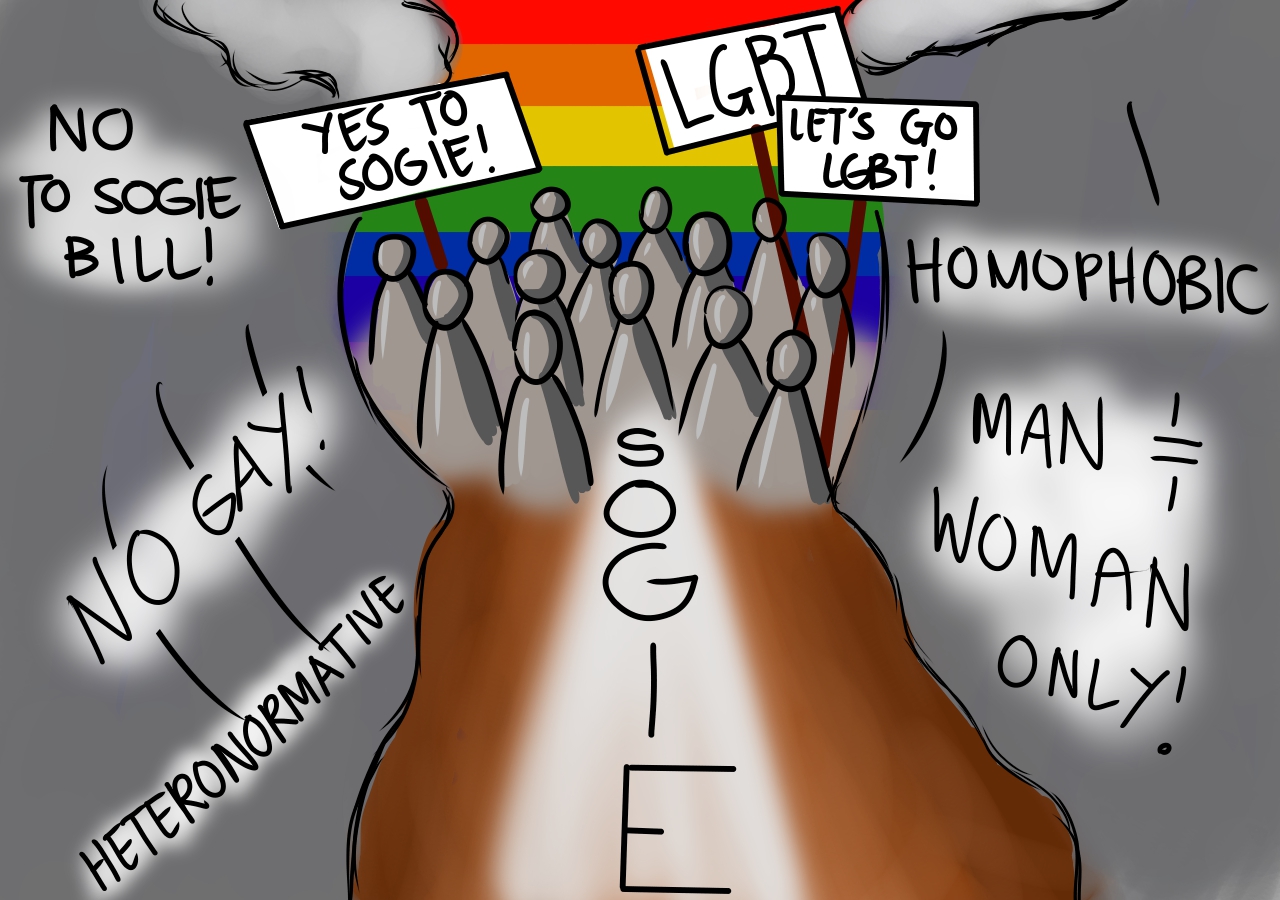
Opinion: So “G” with SOGIE


Photo Credits: Ulap Coquilla

No matter how recent the news is, the issue on gender and sexuality remains as a constant and relevant discussion in our society. In particular, there have been acts of discrimination against those not identify with established norms of heterosexuality. These individuals are also restrained from freely expressing themselves due to the fear of being stigmatized.

Due to the realization of the need to address the issues of discrimination and self-expression, there have been legal initiatives spearheaded by gender and sexuality advocates from the LGBT+ community locally and internationally. One significant appeal in the Philippine legislation is the long-running House Bill (HB) No. 4982, or the “Sexual Orientation, Gender Identity and Expression (SOGIE) Equality Bill.”

But what is the SOGIE Equality Bill in the first place?

It is an anti-discrimination bill which aims to protect the rights and opportunities of individuals in relation to their SOGIE. This means whether someone identifies as “straight” or part of the LGBT+ community, they would be able to receive the opportunities and services they deserve as a human, since every person has a SOGIE and is entitled to their identity and expression. Consequently, this also means the policy recognizes the diversity of genders and sexualities in society.

Particular to the aforementioned, the individuals protected by this bill are all people at the national level, in every social institution such as the family, school, workplace, and government among others, as these have been recognized as possible avenues for discrimination. One thing to note here too is that aside from LGBT+ individuals, this bill is able to protect people who are mistaken as LGBT+ because they are also prone to stigma, discrimination, harrassment, and violence from others.

This bill has also been pitched in the senate and congress since 2000, but has not yet passed as law due to constant interpellation. This stems from the unending doubts, criticisms, and therefore, debates of legislators that hinder its approval.

What then are the criticisms on this bill?

The first criticism pertains to the SOGIE Equality Bill being a form of bandwagonism. Netizens, with comments on social media, rapped at this policy to be a copycat of LGBT+ initiatives in other countries.

However, according to Mr. Gio Potes from the UP Diliman Gender Office (DGO) in an interview, it is not really bandwagonism since the issue of discrimination and violence against LGBT+ individuals has been here in the Philippines for a long time, as per the influence of patriarchal colonialism. In fact, we historically have LGBT+ people in our country like the non-binary babaylan.

“If the Supreme Court holds an online same-sex marriage survey, then that’s more likely to be bandwagonism, since it’s not appropriate to suddenly hold surveys when in fact, the government knows many ways on how to conduct them properly,” said Potes in a mix of Filipino and English.

In addition, how would imitating other countries be bad in this context? If the Philippines would copy its neighbors worldwide to push for an equal and harmonious society, then would that not be much more beneficial to the greater good?

The second, and generally, the main criticism of the opposition to the bill is that it gives “special rights” instead of equal rights to the LGBT+ community. This comes from the apparent bias of the bill in protecting LGBT+ people over “straight” people.

This is said to be seen in the various social institutions included in the policy. For education, critics question how the bill is supposed to give equal opportunities to all students for admission regardless of their SOGIE to exclusive schools, since it allegedly forces trans students into all-boys/girls schools. For families, there is the lingering fear of parents losing the rights to their child, whether by their influence to the child’s identity or their literal custody of the child.

Another example of this “special rights” instance would be the general penalization of “hate speech” in terms of the LGBT+ people’s SOGIE. The bias applies here because, according to Jesus Is Lord (JIL) Church founder Eddie Villanueva, there is a threat of punishment to the expression of those against the LGBT+ community.

According to Potes, the issue on admissions is a long process and can be arranged through conversations or negotiations, so it really does not force trans students into exclusive schools. Also, trans men and women are indeed men and women respectively, so their gender or sexuality does not have any bearing as to how they will interact with others. Instead, the basis for admissions should be the values and qualifications of the student and not their gender.

For families, parents, in fact, do not lose their rights to the child. Also noting that, from studies, children can already identify their gender by the age of three, it is preferred that parents and counselors guide the child in understanding, instead of suppressing, their identity. Though it may be a long process of acceptance for some parents, children being able to decide for themselves is a big step in improving their freedom of expression.

Potes also said that the bill does not give “special rights” to LGBT+ individuals, since it merely aims to give opportunities to the oppressed, who happen to be them, instead of removing the rights of the privileged. As for the punishment concern, there would and must be an investigation first about the allegations on “hate speech” and discrimination. This means accused offenders will not automatically be imprisoned, as they will undergo due process before being judged whether they may just need to receive counselling or pay collateral to the victim.

In other words, traditional and religious beliefs may still be expressed even with the bill enacted. The Church and LGBT+ communities may coexist in society, even if they may clash on certain aspects like SOGIE.

There is no need to be alarmed by this bill, since it only tries to achieve a compromise in giving everyone equal privileges that all humans deserve. Really, if there is something here that is actually undeserved, then that would be the criticisms on the bill.

If the SOGIE Equality Bill gets refiled again in the next congress, it would be best to share correct information about it first to the Filipino community. This is because a major contributor to the constant dissent to the bill comes from the prejudice and fear from the empowerment of the LGBT+ community.

Yes, it is hard to accept and it takes time to normalize things we do not fully understand, such as the diverse identities and expressions we have in society, but gaining the proper knowledge and education regarding this matter helps a lot in confirming that these LGBT+ people do not inherently pose a threat to anyone.

If anything, the SOGIE Equality Bill takes a good step in protecting everyone from discrimination and violence, while promoting the education of SOGIE. This is why it is good to support and back this bill whenever possible: we all benefit from it. //by Aldric de Ocampo and James Tolosa

MC, nakisalamuha sa mga Lumad sa immersion activity


PAGKAKAISA. Sama-samang nagtatalakay ng mainam na paksa para sa balita ang mga Lumad at mga facilitator mula sa UPIS Media Center. Photo credits: Mariel Diesta

Nagsagawa ang UPIS Media Center (MC) ng immersion program sa UPIS 7 – 12 Gymnasium para sa 18 na dumalong Lumad mula sa Bakwit School noong Nobyembre 26.

Bilang pangunahing bahagi ng programa, nagkaroon ng news writing workshop na pinamunuan nina Aldric de Ocampo at Kiel Dionisio. Tinalakay nila ang mga elemento ng balita tulad ng headline & lead, at istruktura ng inverted triangle. Tinuruan din nila ang mga mag-aaral kung paano tumukoy ng mga kabali-balitang pangyayari.

Matapos ang lektiyur, tinulungan ng mga MC facilitator ang mga estudyanteng Lumad sa pagsulat ng mga balita tungkol sa mga karanasan nila. In-edit at ni-lay out ng MC ang mga nasulat na balita at ibinigay ang output na polyeto upang baunin ng mga estudyante sa pagbabalik sa kanilang paaralan.

Nakinig din ang MC sa pagbabahagi ng mga estudyante tungkol sa kanilang mga karanasan at kalagayan sa Bakwit School. Dito, binigyang-diin ang pagpapaalis sa kanilang mga tirahan sa Mindanao at saloobin nila sa kasalukuyang administrasyon.

Bukod sa mga nabanggit na aktibidad, nagbigay ang MC ng mga donasyon na nalikom nila kagaya ng mga hygiene kits, school supplies, at staple goods.

Ayon kay Owen Bernos, isa sa mga nag-host ng programa, “Mas namulat pa [kami] sa mga karanasan ng mga biktima ng conflict sa Pilipinas... para sa mga Lumad naman, naging significant ang immersion na ito para sa kanila dahil may nakuha silang skills sa pagsusulat ng balita. [Magagamit] ang mga skills na ‘yun upang makapagsulat ng mga balitang may halaga sa kanilang sitwasyon.”

Ang immersion activity na ito ay isa sa mga proyekto ng MC para sa kanilang cluster course na Community Development. Ang kanilang guro sa kurso ay si Prof. Marvie D.C. Manalo. //nina Angelia Albao at James Tolosa

Atty. Baguilat conducts human rights talk to Grade 12 students


MESSAGE. Atty. Baguilat leaves his attendees inspired as he reminds them of the social issues involving human rights violations. Photo credit: UP College of Law

Atty. Raymond Marvic Baguilat redefined human rights in his talk to selected Grade 12 students of the Social Sciences and Humanities (SSH) track at Room 208 of Malcolm Hall last October 29.

In his talk, Atty. Baguilat discussed about the basic definition of human rights (HR) as both being a standard of humanity and living with dignity. He also stated significant qualities of the concept, namely universality, inalienability, inherence, interrelation, interdependence, and indivisibility.

Atty. Baguilat also mentioned common misconceptions of HR; specifically, those frequently spread on the internet through social media. These include a sense of entitlement among defenders and a bias towards Western ideals. He also connected those misunderstandings with social issues such as prioritization of development, investigation of HR violations, and public trust.

According to Aldric De Ocampo, one of the attendees of the talk, “Mas lumalim ‘yung alam ko about HR… may napulot pa rin talaga akong synthesis regarding the topic. Naging somewhat philosophical siya and humanistic discussion para sa'kin kaya masasabi kong napaka-helpful niya para sa growing body of knowledge ko regarding the topic.” [My knowledge about human rights deepened…I picked up a synthesis regarding the topic. It was somewhat philosophical and humanistic for me so I could say it was helpful in my growing body of knowledge regarding the topic.]

Atty. Baguilat is an Associate Professor of the UP College of Law. He is also a Senior Research Associate at the Institute of Human Rights (IHR) of the UP Law Center.

This talk was given as an enrichment to students who worked at the UP Law Complex for their on-campus internship. It was also open for students who were willing to attend the said talk. //by Mariel Diesta, Cyñl Tecson, James Tolosa, Gabe Ulanday

News Feature: Relooking at children’s stories with Mrs. Kristine Canon


EXHIBITION. Mrs. Kristine Canon, together with the other participants of the seminar, showcases some of her most famous children stories. Photo credits: James Tolosa

A childlike mind is needed for writing children's stories.

Bearing that thought in mind, Mrs. Kristine Canon shared her experiences as an author of children’s stories in a seminar held in Room 205B of the UP Diliman College of Education (UP CoE) last September 19.

The symposium is in line with the UP CoE’s series of seminars entitled Weavers of Magic, with the theme Para Mamulat, Bumuklat ng Aklat. Here, Mrs. Canon discussed the need to cultivate a love for reading in children.

Passion for writing discovered through children
Mrs. Canon first narrated how she got into writing. When she was a kid, she would watch television and play outside. That routine would continue until she found hidden children’s books inside her school library one day. Eventually, reading short stories after classes became her pastime.

As she grew up, she was able to nurture a love for reading. When she became a parent, she heard more stories of young people. She talked to her sons, daughters, and relatives more frequently. Admiring the ideas conveyed by children she listened to, she was motivated to be like the authors of the books she devoured during her youth.

Successful life as a writer of children’s books
After Mrs. Canon graduated with a Bachelor of Arts in Reading Education from the UP CoE, she started her career as an author. Her first short story Bakit Matagal ang Sundo Ko? was released in 2001.

In this book, a girl was initially anxious about the late arrival of her mother. Instead of fretting, she patiently waited by preoccupying herself with fanciful thoughts. This short story won the Grand Prize for both PBBY-Salanga Writer and Illustrator a few months after its publication.

As Mrs. Canon bagged those two awards, she continued releasing short stories. She partnered with local book companies such as Adarna House, Anvil Publishing, and Vibal Publishing. To date, she has written eight children’s books such as Naaay! Taay! which instills independent decision-making skills and Pahingi Po which teaches readers table manners and wise food-eating.

However, Mrs. Canon did not restrict the themes of her books to traditional topics only. In fact, she explored new topics such as machines in Sakay Na!, where characters expressed their fascination of cars, jeepneys, and other transportation vehicles. She also tried to discuss how medicines work in Asa at Agha, where young doctors worked together to cure diseases.

According to her, “Some of [my] books have been converted to “big” books already… they are taught in public schools today, particularly to enhance the bilingualism of Filipinos.”

Not just an author of children’s stories
Mrs. Canon does not only write short stories. She once collaborated with selected elementary students in Mga Tanod in Kalinaw, a play about the merging of four different worlds. She also experimented on spoken poetry in Laro Tayo? dedicated to her youngest son who is “often left inside the house”.

Mrs. Canon is currently a professor in the Department of Educational Leadership and Management of the De La Salle University (DLSU). She is also a director of the Creative Learning Paths School, a K-12 educational institution that “advocates for progressive education of children”.

Child-friendly approach to children’s stories
Mrs. Canon emphasized the importance of interaction with young people in plot development and characterization of stories. According to her, storytelling enhances their imagination and love for literature. In addition, listening to what children want is “helpful” in writing stories that are for that age group itself.

She added that authors need to be “fluid” in story writing. This is because if they settle on particular themes, they will not realize the variety of topics literature has. Furthermore, having an open mind encourages inclusion of intended audience groups. This is “needed” in the current society, where “people have become more accepting of the differences of others”.

As Mrs. Canon concluded the seminar, she advised, “If you want inspiration with writing, you need to engage with children.” //by James Tolosa

Batch 2020 sharpens up work habits in Personality Development Seminar


INTRODUCTION. Ms. Lalay Fuster smiles in front as she gives a brief overview of the habits needed for success in work. Photo credits: Mrs. Laarni Cabrales

UPIS Batch 2020 students attended the Personality Development Seminar (PDS) at the Audio Visual Room (AVR) on September 18.

The seminar was hosted by Ms. Lalay Fuster, Information and Communication Officer for the Office of Alumni Affairs at the University of the Asia and the Pacific.

Fuster discussed habits of success such as time management, listening skills, decision-making & reflecting, interpersonal & social skills, empathy, professional lifestyle, and stress management.

The students were taught how to conduct themselves in the workplace. They were also given practical tips for each work habit. Some of them participated in mock interviews and team-building activities to apply the habits they learned.

According to Mrs. Cabrales, “Topics specific to soft skills, work ethics/values were discussed plus some points on stress management for UPCAT were incorporated… activities were to strengthen certain points [from the habits].“

The PSD is the third and final seminar pre-internship requirement for Grade 12 students. //by James Tolosa

Batch 2020 students explore Chinese culture in Mid-Autumn Festival


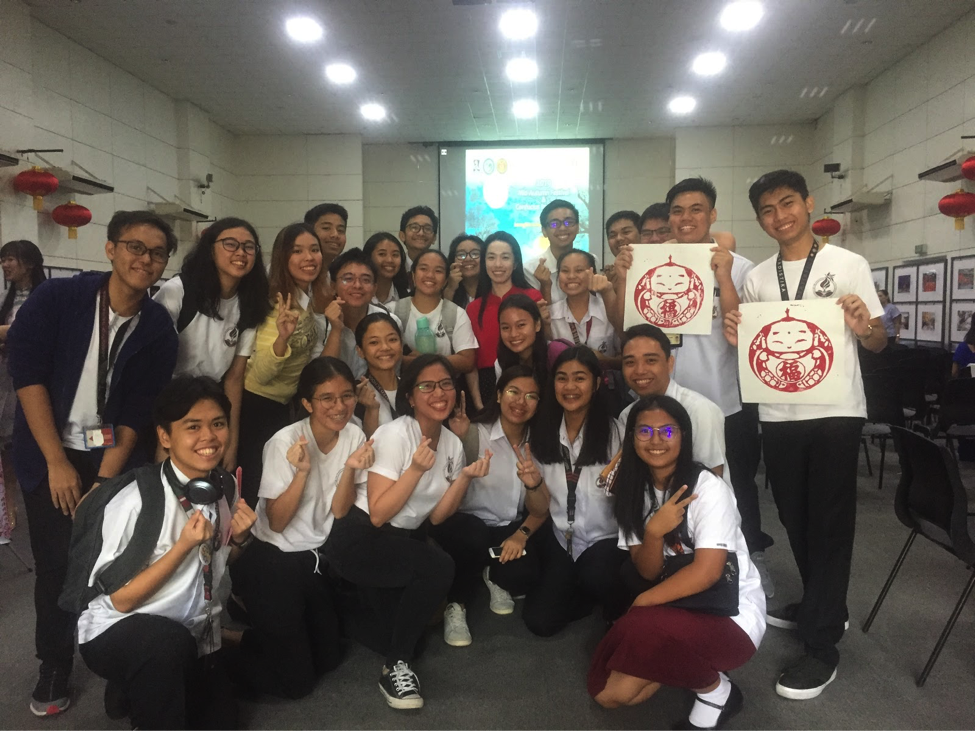
IMMERSION. Grade 12 students smile with their teacher Ms. Yinyin Lu (center) as they show their outputs from the woodblock printing activity. Photo Credits: Mrs. Stella Pascual

UPIS Grade 12 students taking the Mandarin elective commemorated the Mid-Autumn Festival and Confucius Institute Day in the GT-Toyota Asian Center Auditorium last September 11.

With the theme Intangible Cultural Heritage of China, the event was organized by the Confucius Institute of the University of the Philippines Diliman (UPD) and the UPD Asian Center. The Embassy of the People’s Republic of China (PRC) in the Philippines and the Federation of Filipino-Chinese Chamber of Commerce and Industry (FFCCCII) also assisted in the management of the event.

The Grade 12 students listened to messages from Confucius Institute Director Lourdes T. Nepomuceno, UPD Chancellor Dr. Michael L. Tan, and Embassy of PRC Counselor Tian Shanting. These officials talked about the relevance of the harvest festival to Asian culture. They also expressed the significance of the collaborations done by the institute in maintaining diplomatic relations between the Philippines and China.

“This event is important because it serves as a window to bridge the gap between the two countries through education and culture… [through this,] we also highlight Chinese traditions,” Nepomuceno mentioned.

The students tried woodblock printing, writing calligraphy, making gongfu cha (tea art), and painting Beijing opera masks. They also watched performances from the Chinese Cultural Extravaganza, City College of Angeles Performing Arts, and the University of Makati Siglahi Dance Company & Chorale.

The Mid-Autumn Festival is celebrated on the 15th day of the eighth month of the lunar calendar. Nepomuceno also added that the Confucius Institute is now on its fourth year.

This event served as an intercultural activity for the students taking the Mandarin interest course. //by James Tolosa

Feature: A Joyful Summer Spent


Gising. Kain. Tulog. Gising. Kain. Tulog. Our summers usually revolve around this humdrum sequence of actions. After all, we deserve to rest after a tiring, demanding year of school requirements.

While it is important that we unwind during the summer, it is also an opportunity for us to engage in activities without the pressures of school. This includes meeting friends, learning new skills, and discovering career potentials. If you want a break from your usual routine and conquer challenges, it is worth a try to apply for the Ateneo de Manila Junior Summer Seminar (AJSS), a special program of Ateneo de Manila University (ADMU).

A brief description of AJSS

According to Mrs. Kamille Tabalan, AJSS coordinator, the program "gathers a group of talented and vibrant students". It aims to introduce them to college life in the Ateneo for a month through taking modified college courses & extracurricular activities and learning the magis (the great) culture of the university.

The AJSS is offered without charge to outstanding students from prestigious public and private schools around and outside the country. Those interested in applying should belong to the Top 5 of their class, exemplify great leadership skills, and be recommended by their principals and teachers.

Tabalan added that there are about 500 students who take the qualifying test for the program every year. The examination is an adaptation of the ACET (Ateneo College Entrance Test), which consists of Math, English, and Thinking Ability (Abstract Reasoning, Logical Reasoning, Problem Solving). Only the top 15% (around 75) students are admitted.

According to a student from AJSS Batch 52.2, "You have nothing to lose and everything to gain! AJSS immerses you in a college environment, so no matter where you end up, you'll have an easier time adjusting to the next stages of your life."

A brief history of the AJSS

AJSS Batch 14 (1980) students smile for a picture together with Fr. Bill Kreutz, SJ., their Math professor (tenth person in front row). Credits: Josh Benzon

The AJSS was first offered as a five-week college preparatory course in March 1967 to top Grade 9 students across the country. Their teachers were mostly Jesuit friars who were experts in English, Math, Physics, and Chemistry, among others. During that time, topics discussed were also conservative in order for the students and teachers to avoid being incriminated by the Marcos regime.

According to Prof. Rox Velasquez, an alumna of one of the earliest batches of AJSS, "N'ung time namin, wala pa 'yung mga sportsfests at outside activities. Konti lang din mga subjects namin – mostly in the applied sciences... nagpapasalamat ako sa AJSS dahil binago niya pananaw ko sa buhay. [During our time, there were no sportsfest and outside activities. We only had few subjects – mostly in the applied sciences... I am grateful for AJSS because it helped me change my view in life.]"

As the years passed, new activities were added to the AJSS program. These include the Sportsfest, the AJSS Night, the Blue Rose, and management camps. In addition, the Ateneo has started offering financial assistance and dormitory slots for students from the province.

Recently, ADMU decided to divide the passers into two groups as a result of the academic calendar shift. The grade level requirement was also adjusted, i.e. participants are now Grade 11 students belonging to the Top 5 of their strands due to the K–12 program.

Challenging college courses together with "nerds"

Clockwise from L-E: The 37 AJSS Batch 52.2 students wearing their school uniforms in their History Class; the students of the same batch-subgroup with their professor Kite Vocal after their orientation in the Chemistry elective; the whole batch together with their Math professor Queena Lee-Chua during their last day; students celebrating the birthday of their Management professor Bong Olpoc (second person in back row). Photo credits: Christian Sarabia, James Tolosa and Mrs. Kamille Tabalan.

Whoever is selected to the AJSS will be working with smart, studious people. As mentioned earlier, he/she will also be given a taste of college courses in the Ateneo.

Under the School of Humanities (SOH), there will be courses in English and Philosophy. For the former, students will interpret and write various stories, poems, and creative essays. They will also manage a play as a major project of that course. Meanwhile, the latter will give them a background of basic topics such as insight, phenomenology, etc.

The actresses for the main characters Evan and Patrice give advice to their enemy Brett in AJSS Batch 52.2's adaptation of 13 The Musical. Photo credits: Karl Roque

Under the School of Social Sciences (SOSS), the courses History and Psychology will be offered. In History, students will assess historical events in an innovative way, i.e. via collective memory. Meanwhile, they will learn how to empathize in different personalities in the second course. Facis Trisha Reyes from AJSS Batch 50 also added that if time permits, they will take care of an egg as a project.

Under the School of Science and Engineering (SOSE), they will take Math, Biology, Chemistry, and Physics. In the first subject, they will be answering "unsolvable" problems and proving various theories. For the other three subjects, they will be having experiments such as titrations, field investigation, etc. The science subjects vary per year, depending on the availability of the instructors.

Lastly, they will take the core course of the John Gokongwei School of Management (JSOM). Here, they will be making their company and inventing a school-supply product.

In order to pass the requirements of the summer program, one must have a grade of at least D (at least 50 in Math; 60 in Management, and 70 for the other subjects). His/her grades will be summarized via the QPI (Quality Point Index), or the average of all courses.

Exploring the facilities offered by the Ateneo

AJSS Batch 52.2 students walk to JGSOM Student Enterprise Center (JSEC) to have lunch. Photo credits: James Tolosa

Throughout the entire seminar, the students will be exposed to the services given by ADMU. Some of the facilities presented include the JSEC, a strip of food stalls managed by students under JGSOM, Gonzaga Hall, the main cafeteria of the Ateneo, and the bookstore of the Manuel V. Pangilinan (MVP) Center for Student Leadership.

Students will also be given a tour of the different student halls in the Ateneo. They will also be given access to the five-story Rizal Library, which contains more than 400,000 volumes as of 2017. In addition, they will be allowed to exercise inside the college covered courts for their PE classes and Sportsfest.

Exciting extracurricular activities

Clockwise direction: The AJSS Batch 52.2 Sportsfest Teams Red, Yellow, Orange, and Purple smiling triumphantly after their cheer dance. Photo credits Mrs. Kamille Tabalan.

Having a lot of courses does not mean that students will be sitting all day and doing projects. In fact, they will be having weekly team building activities and PE classes. Prestigious athletes from various varsity teams in the Ateneo will be teaching them techniques for the upcoming sportsfest.

In the sportsfest, participants will be assigned to a random team. They will also be playing sports such as basketball, futsal, badminton, volleyball, etc. There will also be relays on the said event.

Another major part of the sportsfest will be the Cheer Dance. Each team has to make a three to five-minute routine and mash up music. Making pompoms, stunts, cartwheels, and other cheerleading techniques are also recommended to give the team an edge.

Clockwise direction: The AJSS Batch 52.2 and some AJSS alumni enjoying the carousel before the end of the field trip, getting ready for the Ekstreme ride, shouting with exhilaration in the Vikings ride, and posing inside the bus on their way to Enchanted Kingdom. Photo credits: James Tolosa

For the "most fun" part of the program, there will be a fieldtrip. The class will get to choose where they want to go – educational museums, thrilling amusement parks, etc.

For instance, students from the batch-subgroup that graduated recently decided to go to Enchanted Kingdom. Program facis (alumni serving as supervisors) and some alumni came along and joined them in trying the rides and booths offered by the theme park.

Tear-jerking celebrations and bonding moments

The participants of AJSS Batch 52.2 listen to the final, nostalgia-inducing performance of some of their classmates during the AJSS Night. Photo credits: James Tolosa

The program will culminate with an informal party called AJSS Night. Class officers and different committees will work together to organize the event. There will be mini games, performances, and even awards presented in the event.

An important tradition of the AJSS is celebrated during this event. Here, students will give blue roses to their classmates who they find "special" and dance with them.

The AJSS Batch 52.2 boys (left) and girls (right) gather in the stage for a picture before they leave the Graduation Reception and bid their goodbyes. Photo credits: Facis Trisha Reyes

A few days after the AJSS Night, the students will graduate from the program. Each participant will receive a certificate showing that he/she was able to complete the program with flying colors.

Upon receiving so, he/she is already qualified for any course of their choice (both honors and non-honors) in ADMU. Valedictorians of their batches get 100% scholarship in the Ateneo, while salutatorians avail 50%. This means that they are already exempted for the ACET.

There will be a graduation reception immediately after the ceremony. Here, students will eat, perform dances, and sing together for the last time. Some may opt writing messages for their classmates as a token of remembrance.

Clockwise direction: The AJSS Batch 52.2 having their dinner in Sbarro after graduation practice, finishing their bowling match in Eastwood, posing for a group picture after playing paintball, and having a mini-reunion together with some Batch 52.1 students and program moderators. Photo credits: Hannah Sproten and James Tolosa

However, the friendships formed should not end after the five-week summer seminar. Despite going back to their respective schools, graduates of the AJSS still devote their time to have reunions and rekindle the moments they had.

According to a student who finished the program, "Being confined to mostly STEM track classmates has left me sort of out of touch with people from other strands, and I'm grateful for the opportunity [given by the Ateneo] to interact with them... overall a really good way to spend my last summer of high school!"

Now that you have been given a sneak peek – the co-curricular & extracurricular activities and facilities of ADMU's special program, you may consider spending five weeks of your summer with this challenging yet life-changing seminar.

If you want to be productive in your vacation months and think you satisfy the requirements of the said program, you may start applying for AJSS Batch 53 in January 2020. Good luck, and have a joyful summer with AJSS! //by James Tolosa